Islamic Society of Boston · Est. 1981
A Community's Journey
Across Five Decades
From the first mosque in Quincy (City of Presidents) to the largest mosque in New England, located on Malcolm X Boulevard in Roxbury, this is the living story of a community of faith, resilience, and belonging.
A vibrant and engaged
American Muslim community
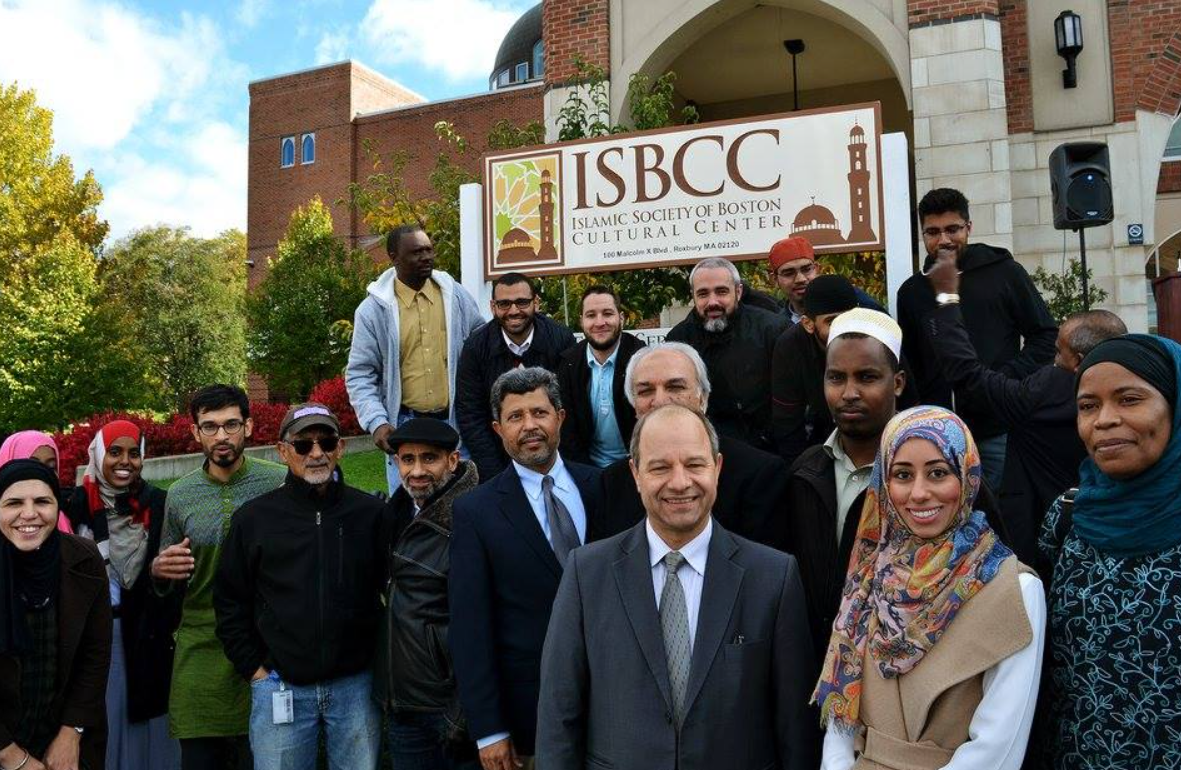
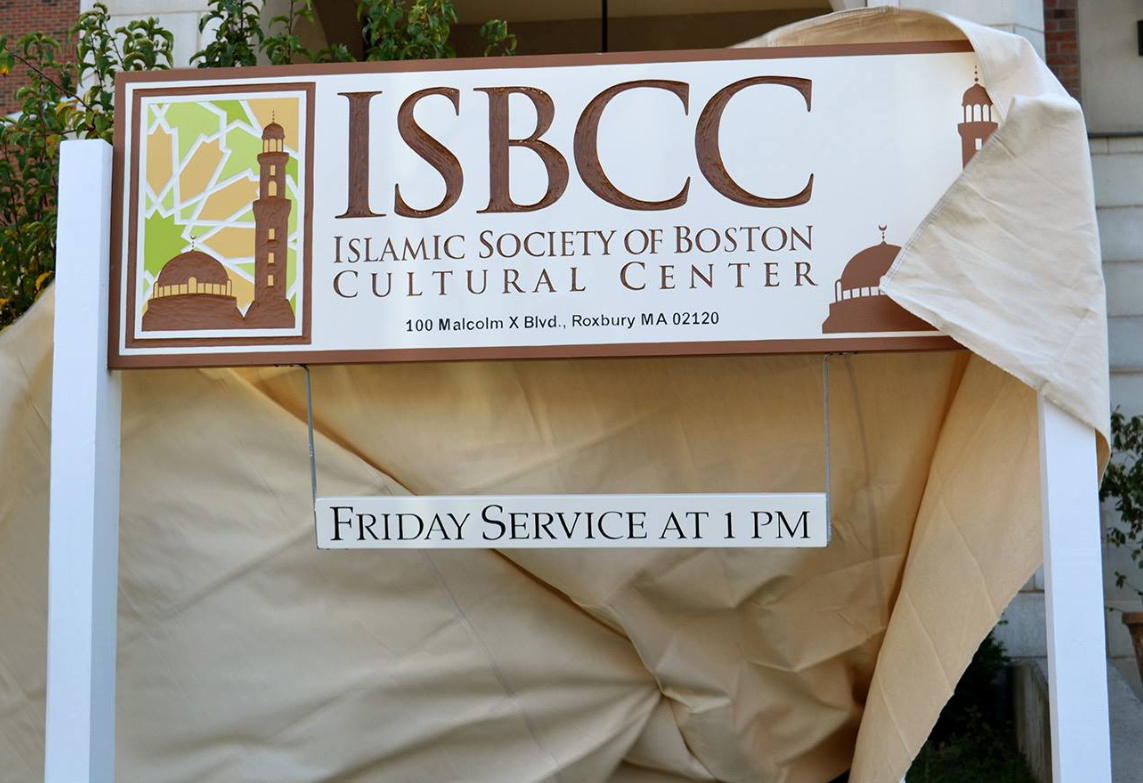
The Islamic Society of Boston (ISB) is a vibrant and engaged American non-profit organization that adheres to Islamic principles. It owns and operates two mosques (masjids): the ISB mosque, located at 204 Prospect Street, Cambridge, Massachusetts, which serves approximately 300 people at weekly Friday prayers (jum'ah); and the ISB Cultural Center (ISBCC), currently the largest mosque in New England, located in the historic inner-city neighborhood of Roxbury, Massachusetts, on 100 Malcolm X Blvd.
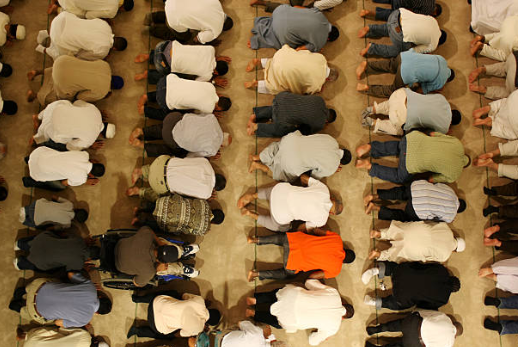
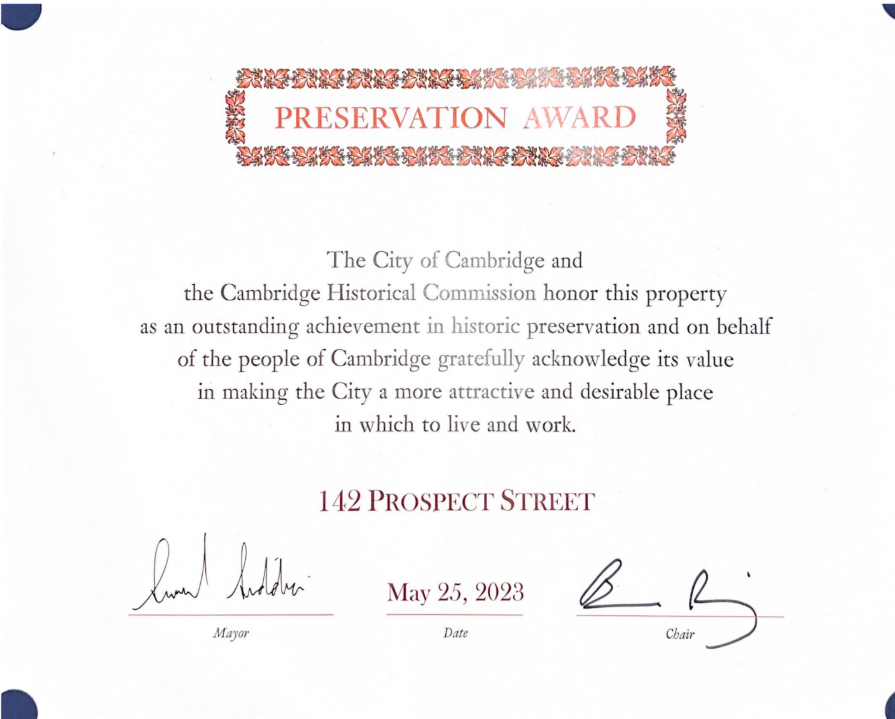
The ISBCC serves approximately 1,700 congregants at Friday prayers each week. On major Islamic holidays (Eids), in collaboration with multiple other local mosques, ISB holds multiple sessions to accommodate approximately 10,000 worshipers. The ISB also owns residential property as part of its endowment (waqf). For preserving the Cambridge property's original architecture, the ISB won the Preservation Award from the Cambridge Historical Commission in 2023.
ISB's vision is to build a community of leaders rooted in the Islamic tradition, committed to American ideals, and empowered to serve the common good. A diverse and substantial number of Muslims in Massachusetts helped establish and develop the ISB organization so it can fulfil its mission to teach and live Islam in America.
Origins of the Islamic
Society of Boston (ISB)
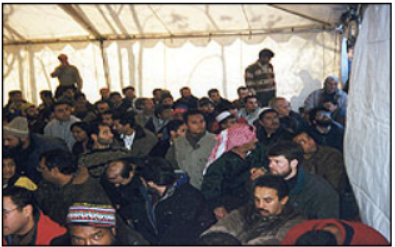
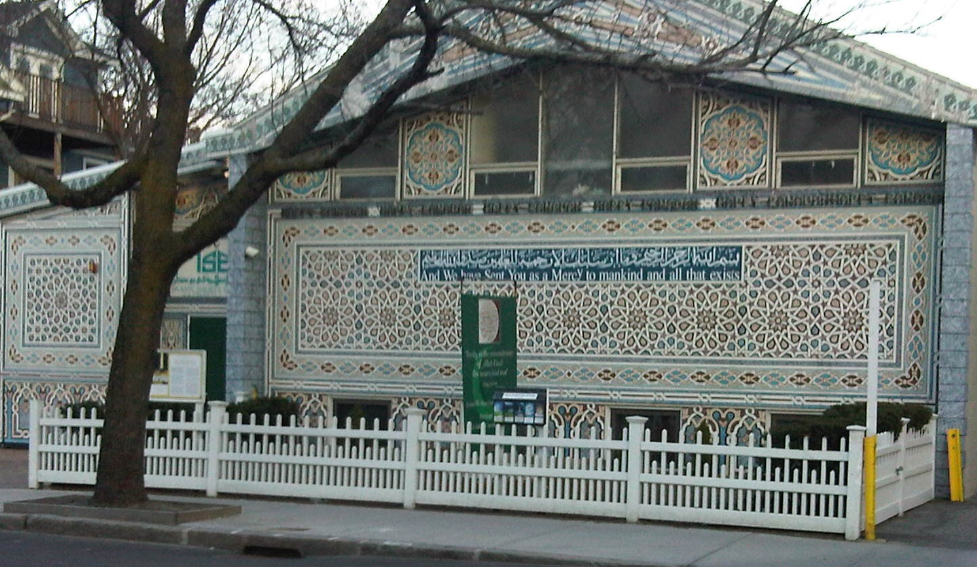
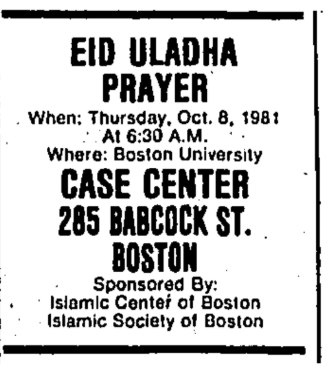
Beginning with the Immigration & Nationality Act of 1965, passed by Congress, a new wave of students and professionals from more than fifty Muslim countries came to America to work and study in cities like Boston and Cambridge. To preserve their religious identity, the Muslim international students and professionals traveled by train and bus to the first dedicated mosque built in Quincy, Massachusetts, The Islamic Center of New England (click to learn more). The center was founded in 1964 by American Muslims, whose parents had emigrated from Lebanon at the turn of the 20th century and settled in Quincy to work at the Fore River Shipyard. The new leaders with their knowledge of Islam were a welcome addition to the isolated community. They volunteered to teach religion and Qur’anic Arabic at the Sunday school and also served on the Board of Directors.
As the decades passed, these international graduate students and their families established their Muslim-American identity in cities and suburbs across the state. In 1982, a core group officially incorporated a non-profit organization, the Islamic Society of Boston. In 1993 they purchased the Knights of Columbus building at 204 Prospect Street, Cambridge Massachusetts. In 1995, after completing renovations, the first mosque in Cambridge officially opened for prayers and was quickly filled with the growing Cambridge Muslim community.
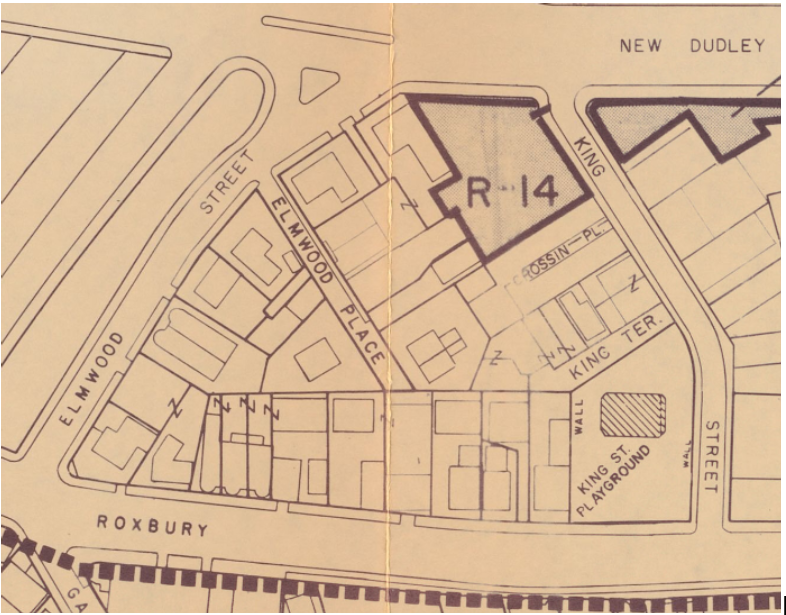
An abandoned lot.
A sacred duty.
A similar story of growth was taking place in Boston. The Muslim Council of Boston (MCB)
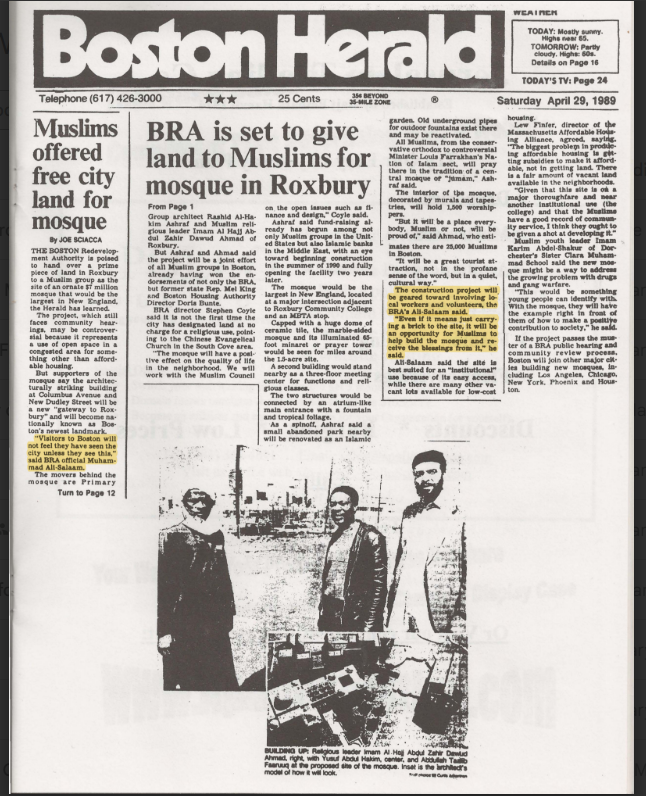
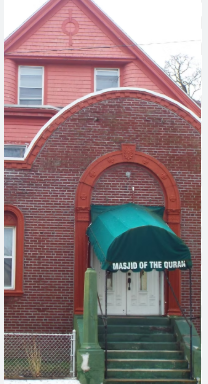
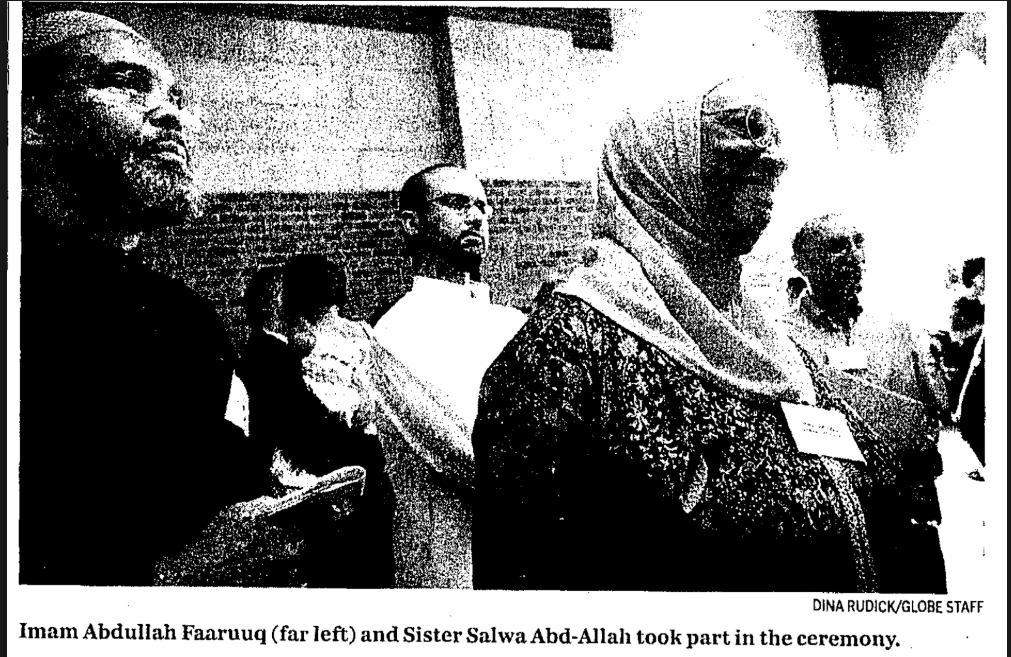
(click to learn more), a non-profit organization, was incorporated in 1988 by Boston’s African American Muslim leaders, Imam Al-Hajj Abdul Zahir Dawud Ahmad, Yusuf Abdul Hakim, Imam Taalib Mahdi, and Imam Abdullah Taalib Faaruuq. These leaders had seen their two historic, community mosques in Boston and Dorchester reach capacity, and envisioned building a new mosque to encourage greater spiritual and cultural development of Boston’s Muslim community.
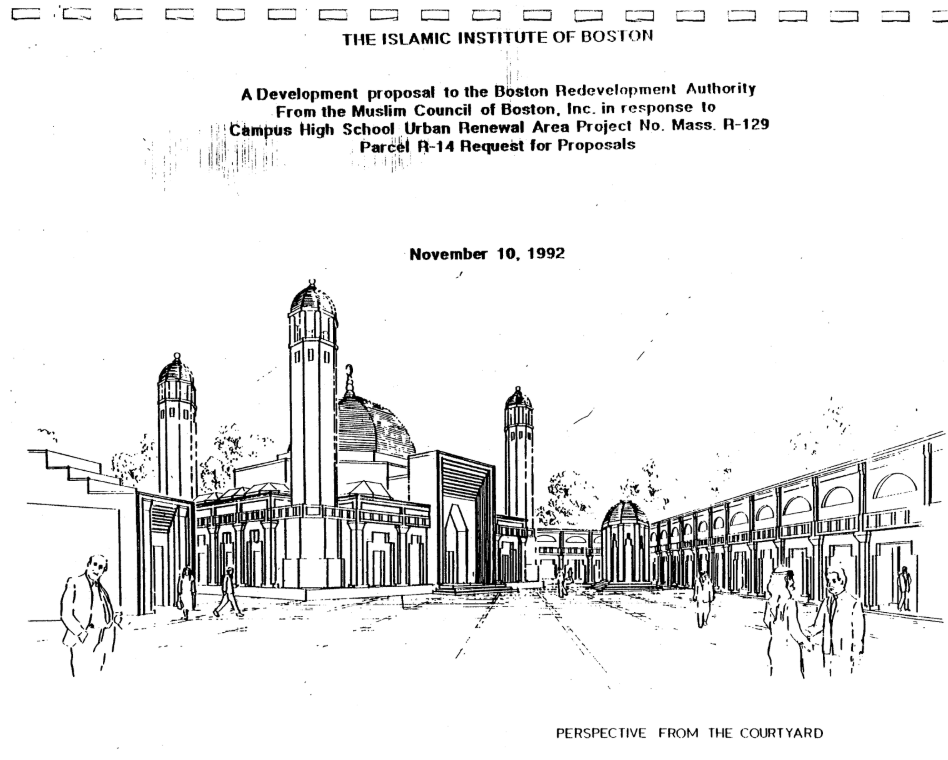
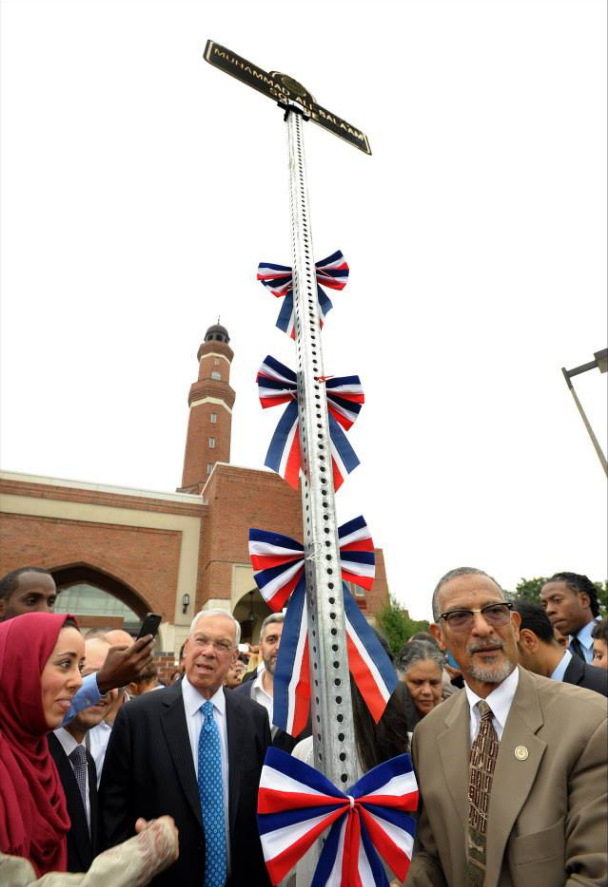
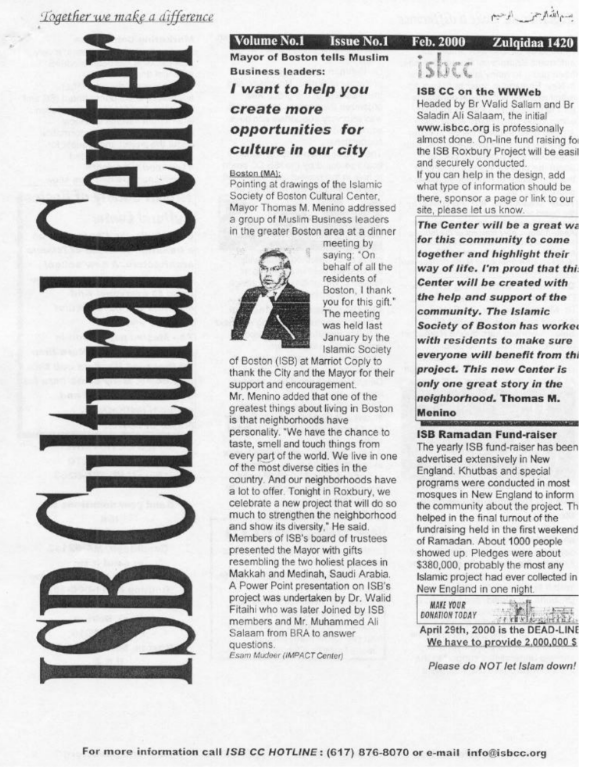
In 1989, the MCB successfully acquired a parcel (Parcel R-14) of abandoned land in Roxbury, an area of predominantly African American neighborhoods affected by urban blight and other issues. The land was part of the larger Boston Redevelopment Authority (BRA) redevelopment plan, led by the late Muhammad Ali-Salaam (click to learn more) , the BRA’s Deputy Director of Community Planning and Special Projects.
Even with their efforts to raise the millions of dollars needed to build a mosque, by 1998, Parcel R-14 remained undeveloped, and the MCB was at risk of losing the land. As the Cambridge Mosque was steadily outgrowing its facilities, the MCB and Muhammed Ali-Salaam approached the ISB leaders and other members of the Islamic Council of New England (incorporated in 1984), an organization with approximately 20 member mosques at the time, to help raise the necessary funds.
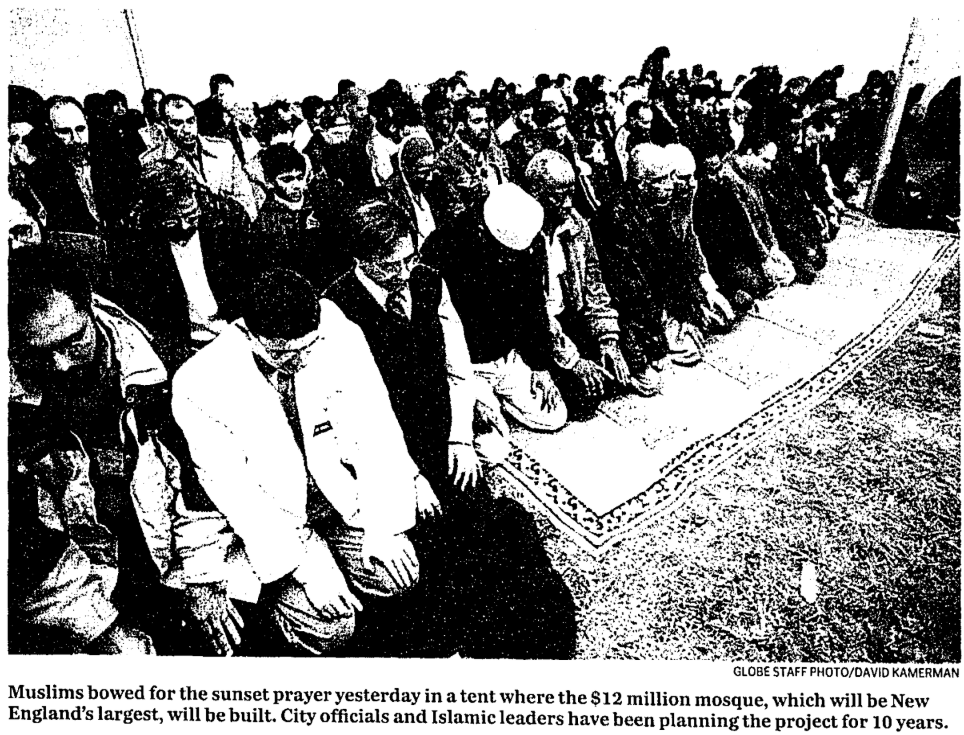
Muslims have always held to the traditional view that acquiring land and constructing a mosque are sacred duties involving faith, patient perseverance (sabr), and prayer. When approached by the MCB, the ISB’s leadership regarded the request as a once-in-a-lifetime opportunity to address the fast-growing Muslim population in Boston and Cambridge and provide adequate worship space and educational facilities. In August 2000, the BRA approved the final redesignation of the land to the ISB non-profit organization, along with some minor planning modifications and obligations.
The post-9/11
years of opposition
Following the heinous attacks of September 11, 2001, and the immediate national atmosphere of suspicion of Muslims, the ISB leadership, made up of Muslim graduate students and their families from more than 30 countries, became the targets of Islamophobic attacks from some vocal quarters. The Islamophobic group, consisting of self-proclaimed experts on radical Islam and Islamic terrorism, was joined by media outlets and reporters to embroil the ISB leadership in multiple lawsuits (2003 to 2007), which led to the suspension of construction on the abandoned land (Parcel R-14).
See details: The Journey of Faith & Resilience (click to learn more).
In 2005, the ISB organization launched a nine-point countersuit against 17 defendants, including eight media entities and civil conspirators. The countersuit claimed that the plaintiff had engaged in intentional, reckless, and/or negligent reporting and the defamation and intimidation of its leadership. In 2007, following a negotiated legal settlement, all legal cases were dropped.
The ISB declared it a legal victory for religious freedom.
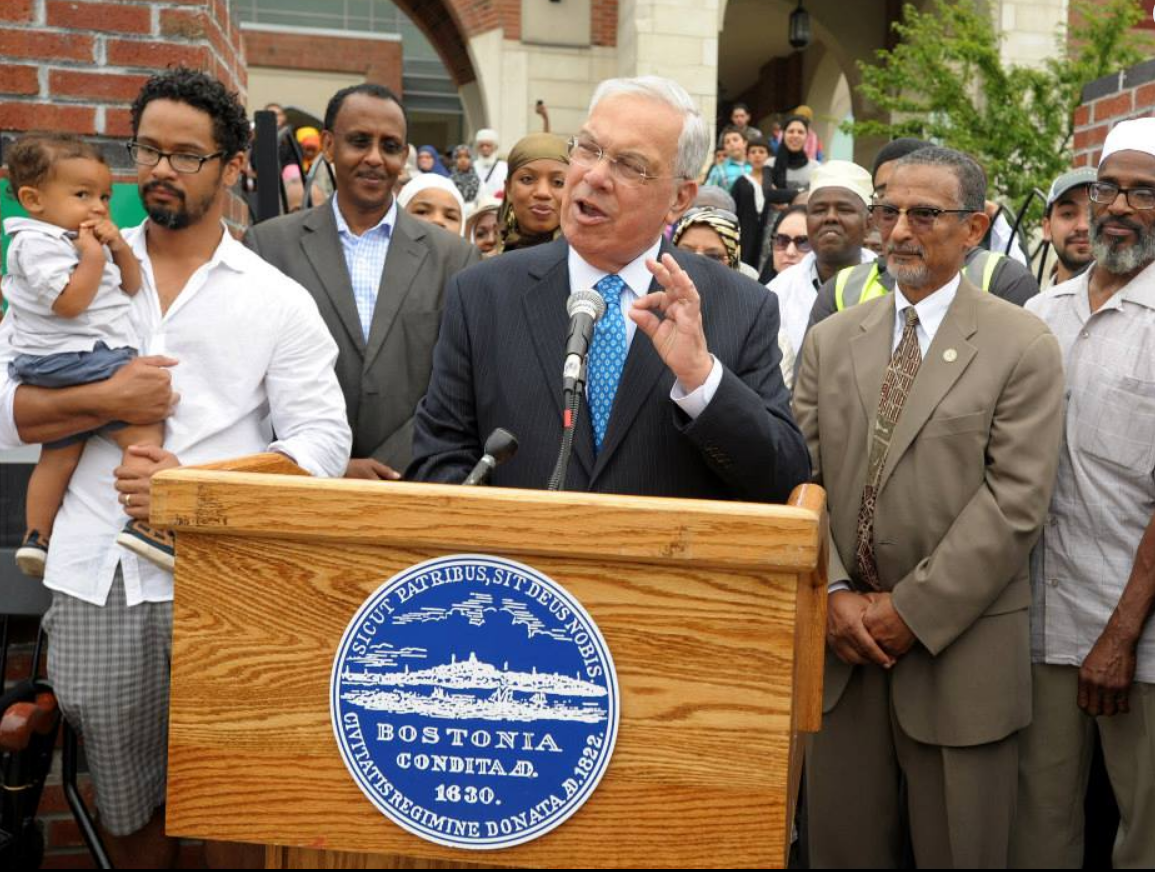
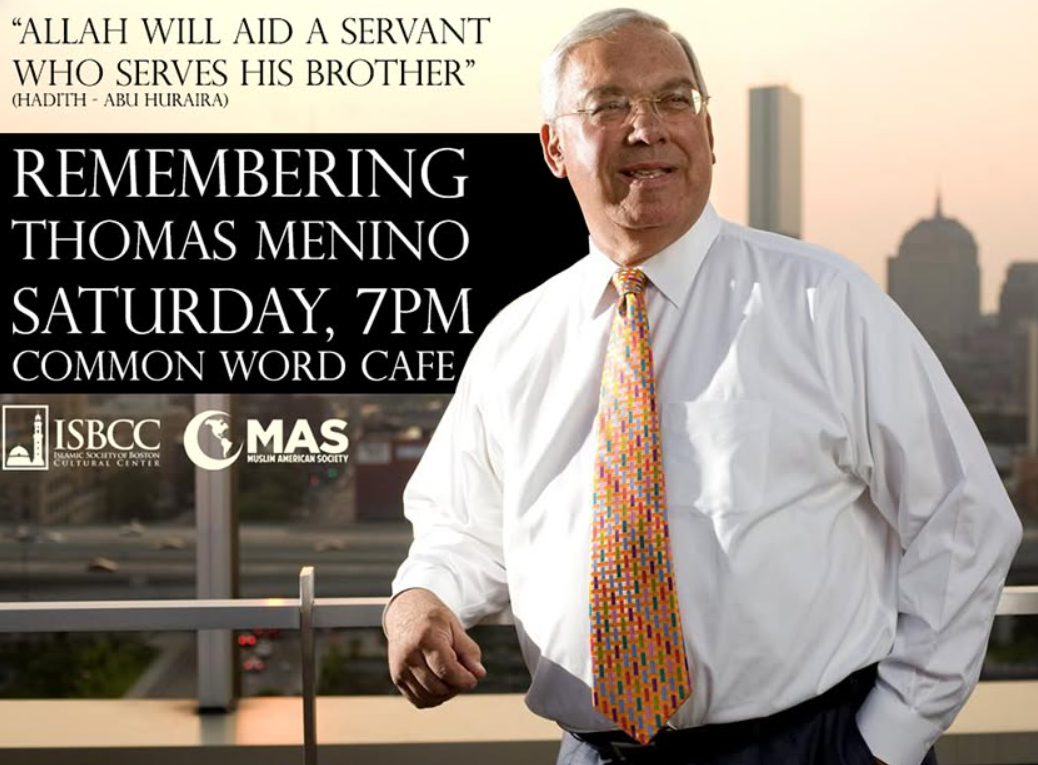
Despite the atmosphere of intolerance, the ISB’s building project in Roxbury enjoyed widespread community support. Boston’s Mayor Thomas Menino, the city’s longest-serving mayor, and other prominent and respected figures recognized that the cultural center would serve the needs of the rapidly growing Muslim population in the Greater Boston area. Supporters of the project were also aware that for decades, the MCB and ISB leaders had been promoting increased understanding of Islam in the community through interfaith dialogue.
Boston stands
together
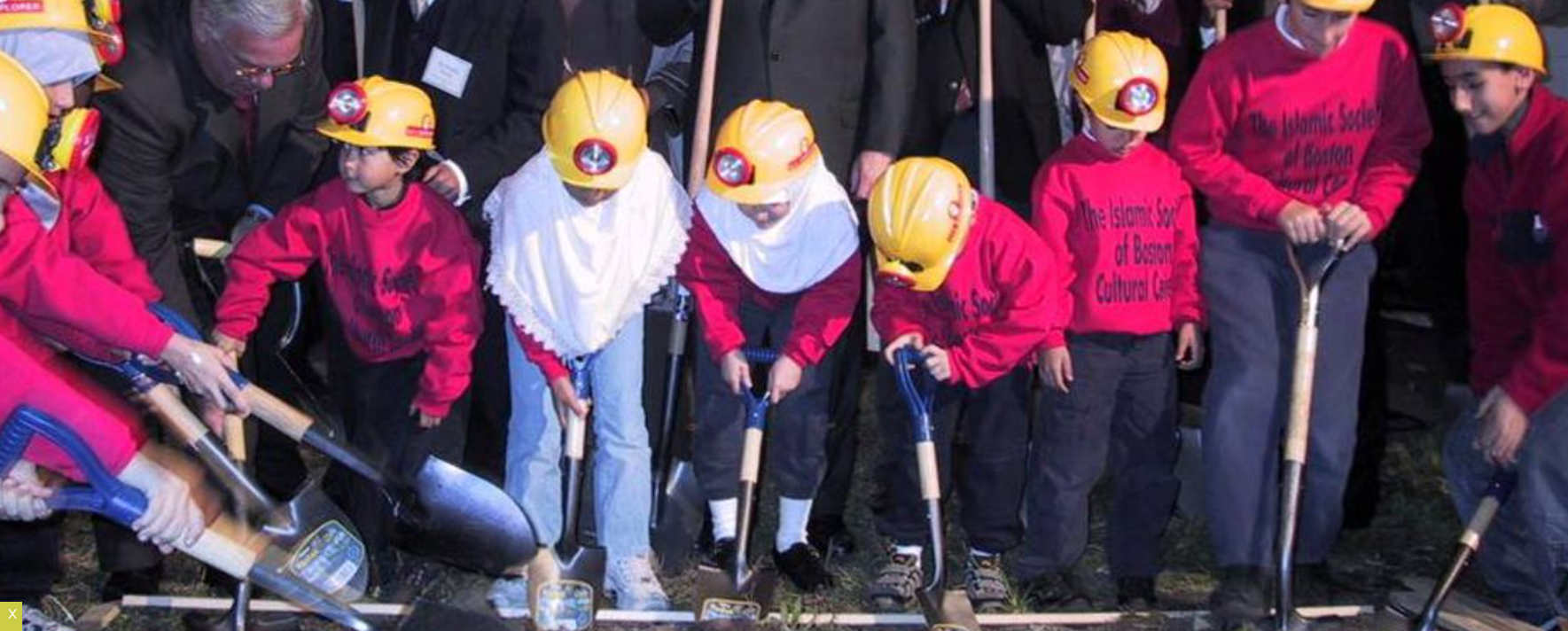
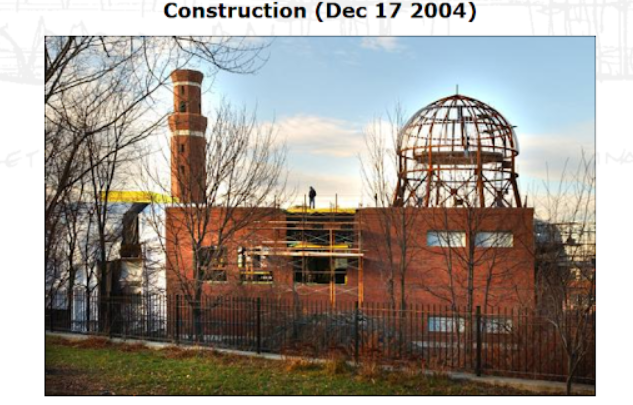
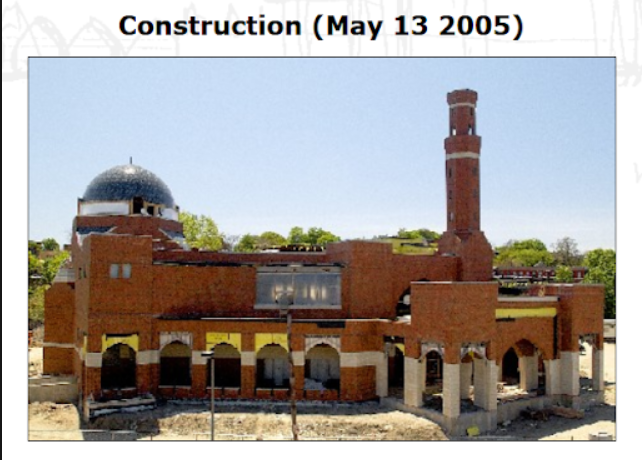
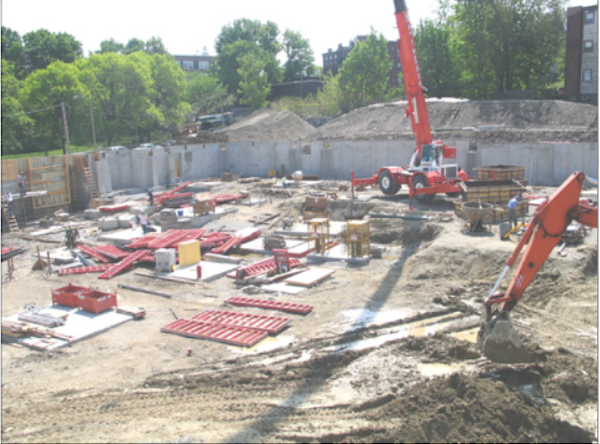
The groundbreaking ceremony was attended by Mayor Thomas Menino, Boston City Councilman Chuck Turner, U.S. Representative Michael E. Capuano, and religious leaders including Bishop Filipe Teixeira of the Catholic Church of the Americas, and Imam Talal Eid of the Islamic Center of New England in Quincy and Sharon, Massachusetts. By 2004, construction was underway.
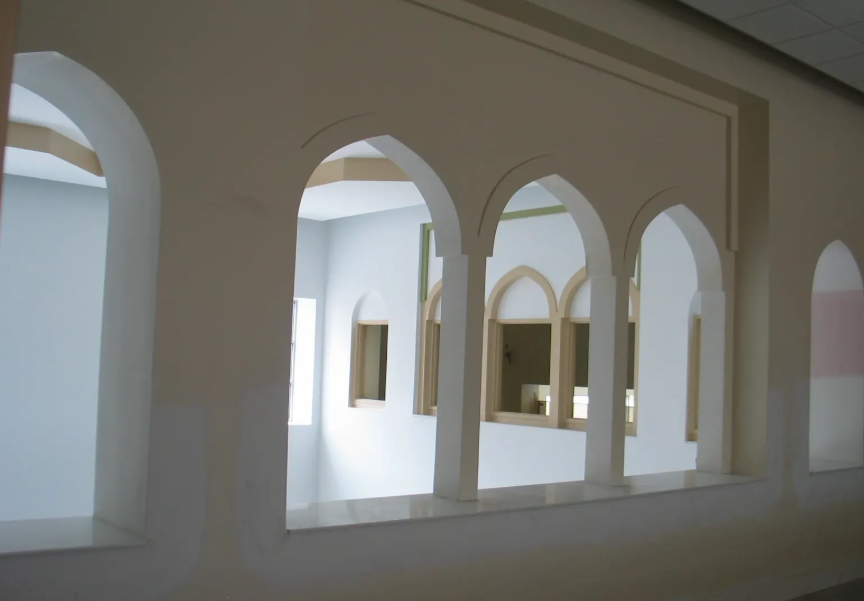
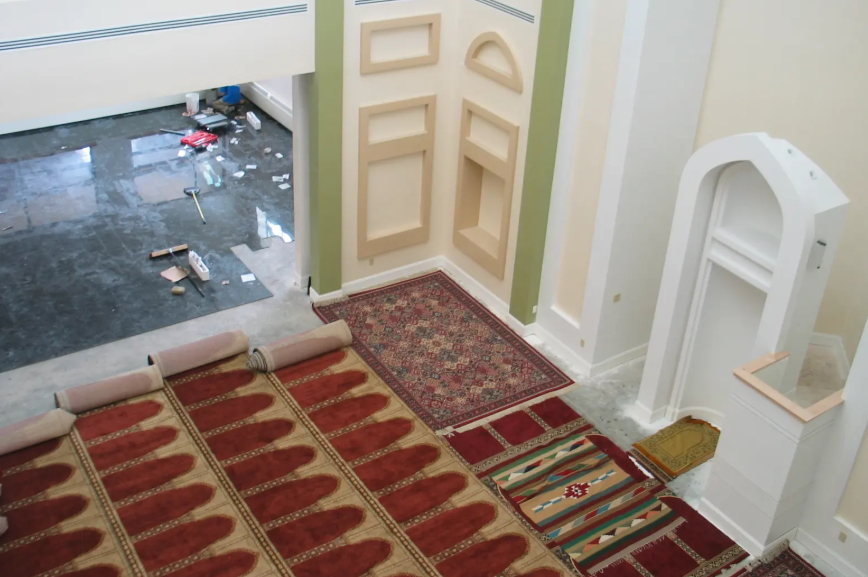
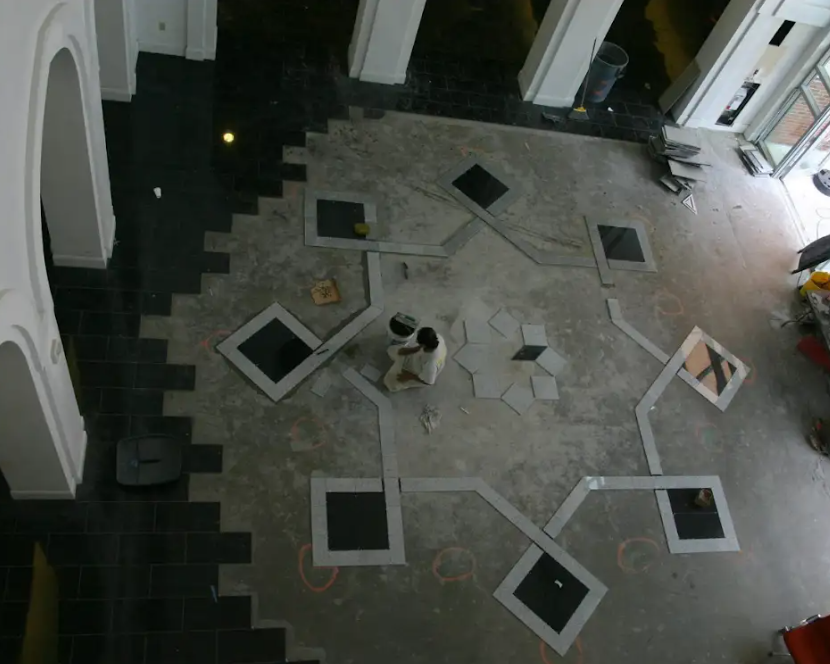
Sample of construction photos (click to learn more)
On June 27, 2007, an Intercommunity Solidarity Day was held at the site of the unfinished ISBCC building. Approximately 300 faith and community leaders, academics, civil rights leaders, and elected officials attended. The event included representatives from the Cardinal, support from the Massachusetts Council of Churches, from dozens of Jewish leaders, rabbis, congregation members, the President Emeritus of the Black Ministerial Alliance, the NAACP, City Councilors, the current State Senator, the ACLU, the ADC, and the various Imams of the Boston area. All spoke about the importance of intercommunity cooperation and their joy at seeing the mosque overcome challenges to become established. A group of young Jewish community activists who started the website Jewssupportthemosque.org presented the ISB with a $2,000 cheque they raised online.
Raising
the Minaret
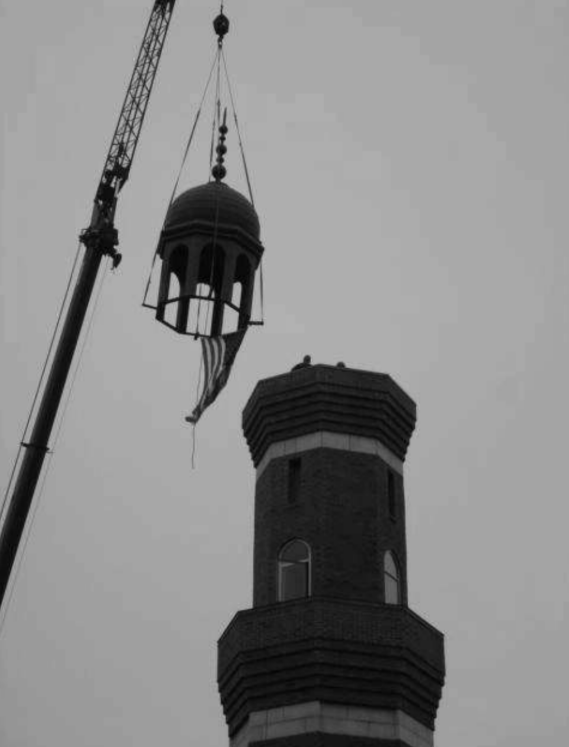
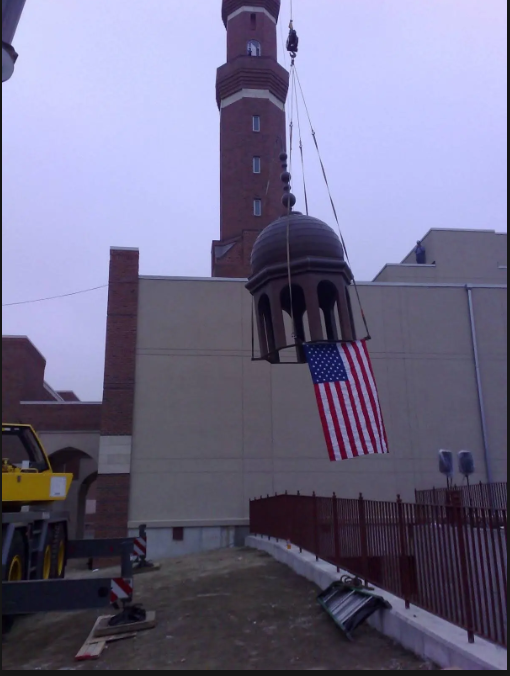
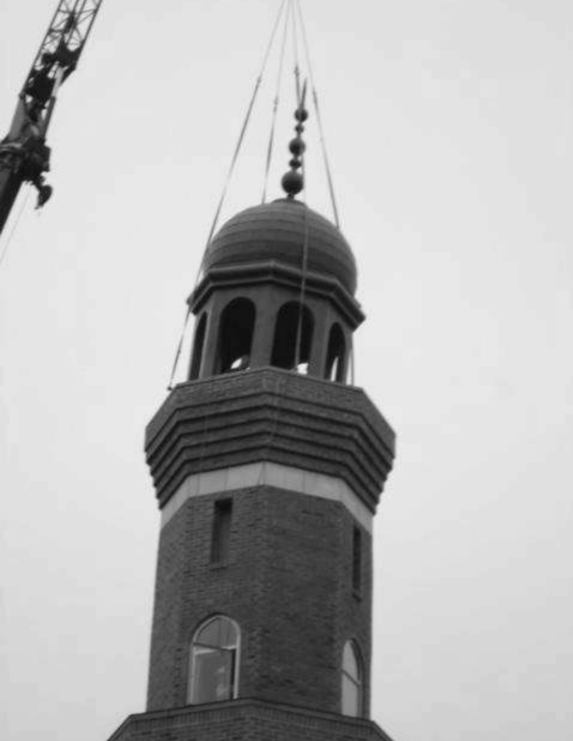
By 2007, after two decades, the Muslim communities of Greater Boston and New England rejoiced at the Minaret Capping Ceremony of its landmark mosque in Roxbury.
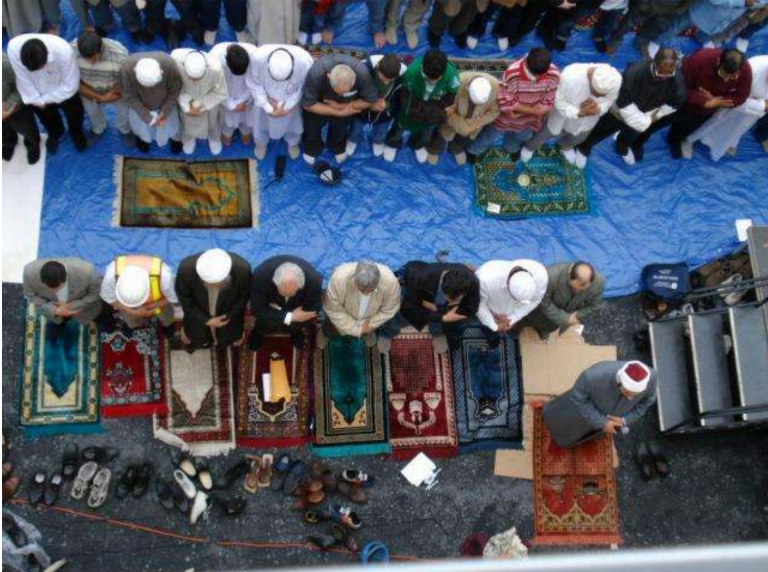
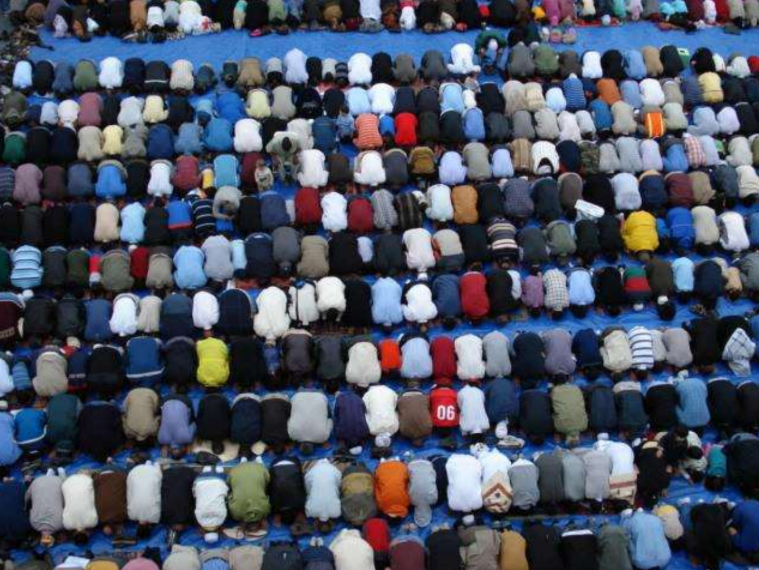
Over 2,500 Muslims gathered outside the mosque to pray, while other members of the Boston community came to share in the joyous occasion. A 5,000-pound copper canopy (supported by the American flag) was hoisted by a crane and lowered onto the 140-foot-high minaret, and the ISB’s Imam called the faithful to prayer (the athan). This momentous occasion paved the way for continued construction.
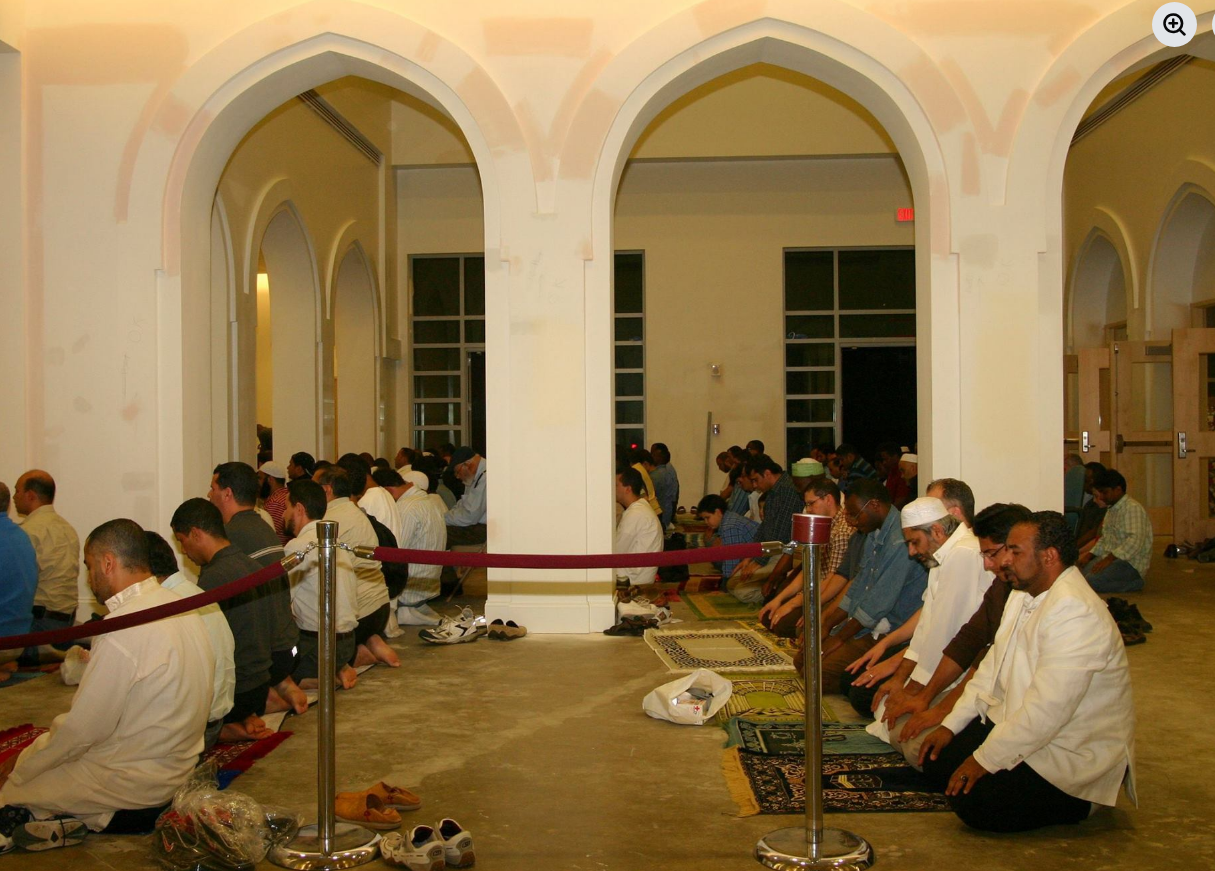
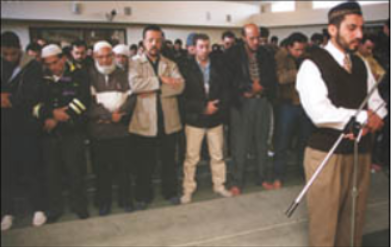
On September 28, 2007, the first prayers were held inside the ISBCC. Although the construction of the ISBCC was incomplete, the leadership received a temporary permit from the city allowing the Muslim community to use the building for prayers during Ramadan. More than 2,000 congregants and supporters from across New England attended, including a delegation of students from the Harvard Islamic Society (HIS).
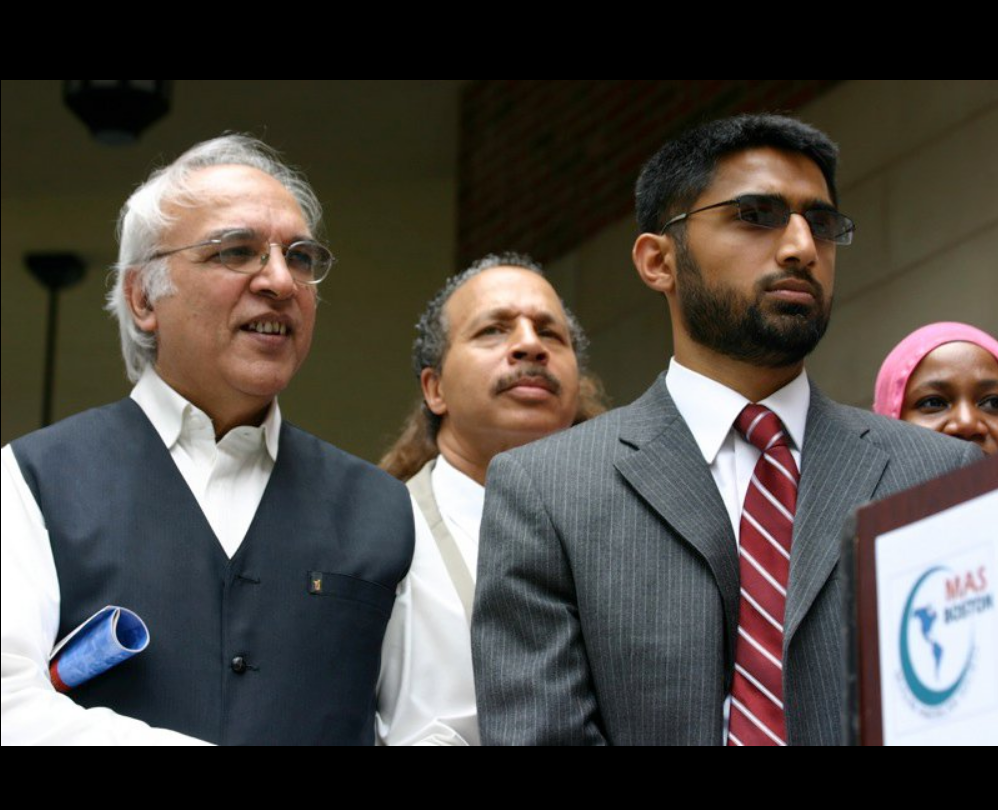
In September 2008, the ISB leadership selected the MAS Boston chapter of the Muslim American Society to manage newly built ISB Cultural Center operations and fundraising for a five-year term, with a possibility for an additional five-year term. At the time, MAS Boston was the largest grassroots Muslim organization in Massachusetts, with a dedicated membership base statewide and a network of over 50 chapters nationwide. Their ten-year collaboration (2008–2018) enabled the ISB Cultural Center to deliver the moderate, peaceful message of Islam in Greater Boston and helped each organization expand its reach and impact.
The doors open.
The Athan rises over Roxbury.
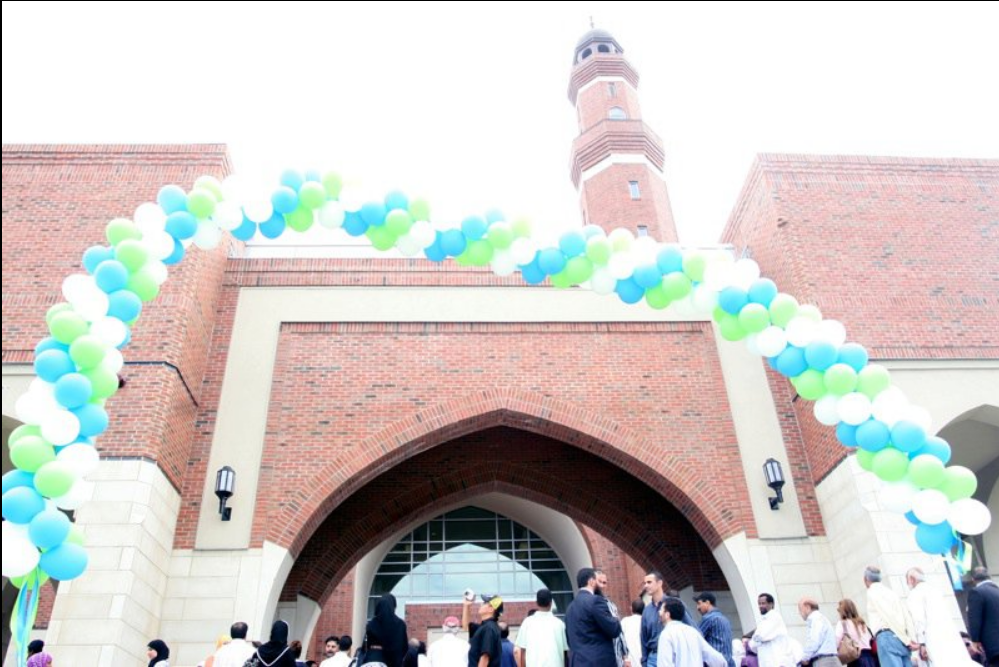
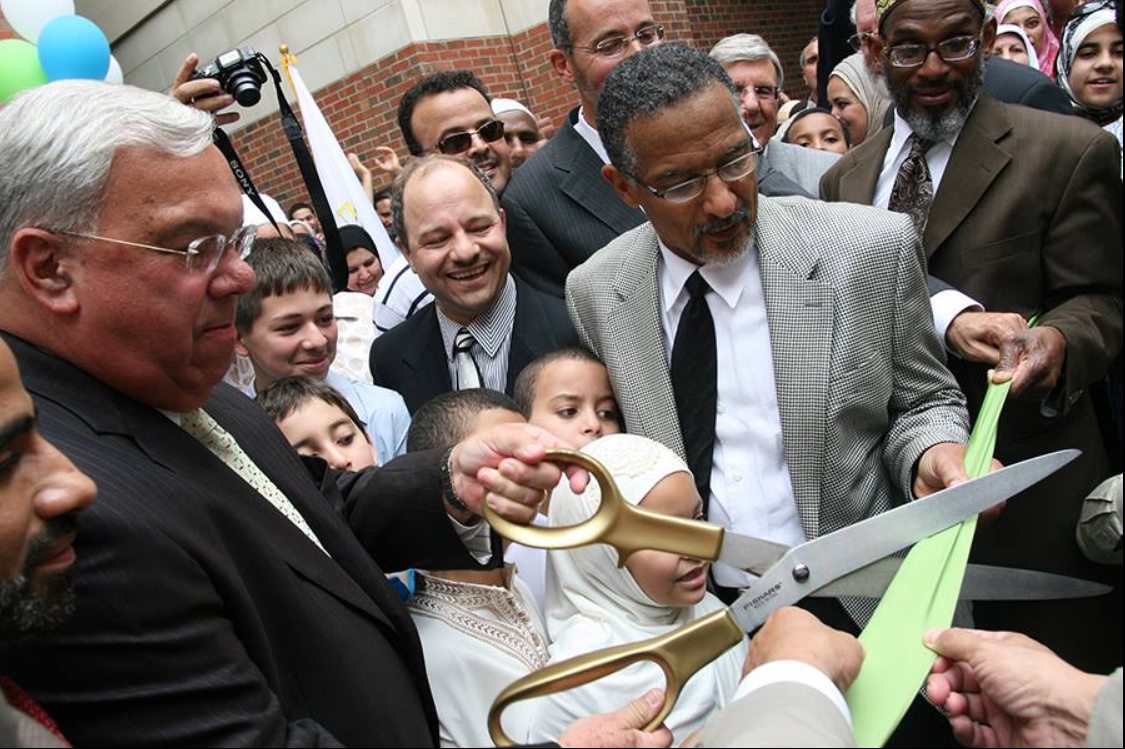
To celebrate the completion of the ISBCC building in Roxbury, an inauguration ceremony was held on June 26, 2009. It included an interfaith breakfast, a prayer service, and a ribbon-cutting by Mayor Menino. The public ceremony was attended by a large crowd and featured speeches by prominent figures, including the first Muslim Congressman, U.S. Representative Keith Ellison and William A. Graham, Dean of Harvard Divinity School.
The ISBCC, located in Roxbury, is a 70,000 sq ft mosque and cultural center. It is surrounded by some of the world's top schools and universities. Due to its size and unique profile as part of an American Muslim non-profit organization, the ISBCC is more than just a place of worship. It serves as a cultural center for countless others in the Boston community and beyond, and attracts a diverse congregation spanning racial, ethnic, educational, and socioeconomic backgrounds. The building houses a worship space, an Islamic Sunday school, a cafe, facilities for washing the deceased and Islamic funeral preparations, and a multipurpose space for community functions, programs, and events.
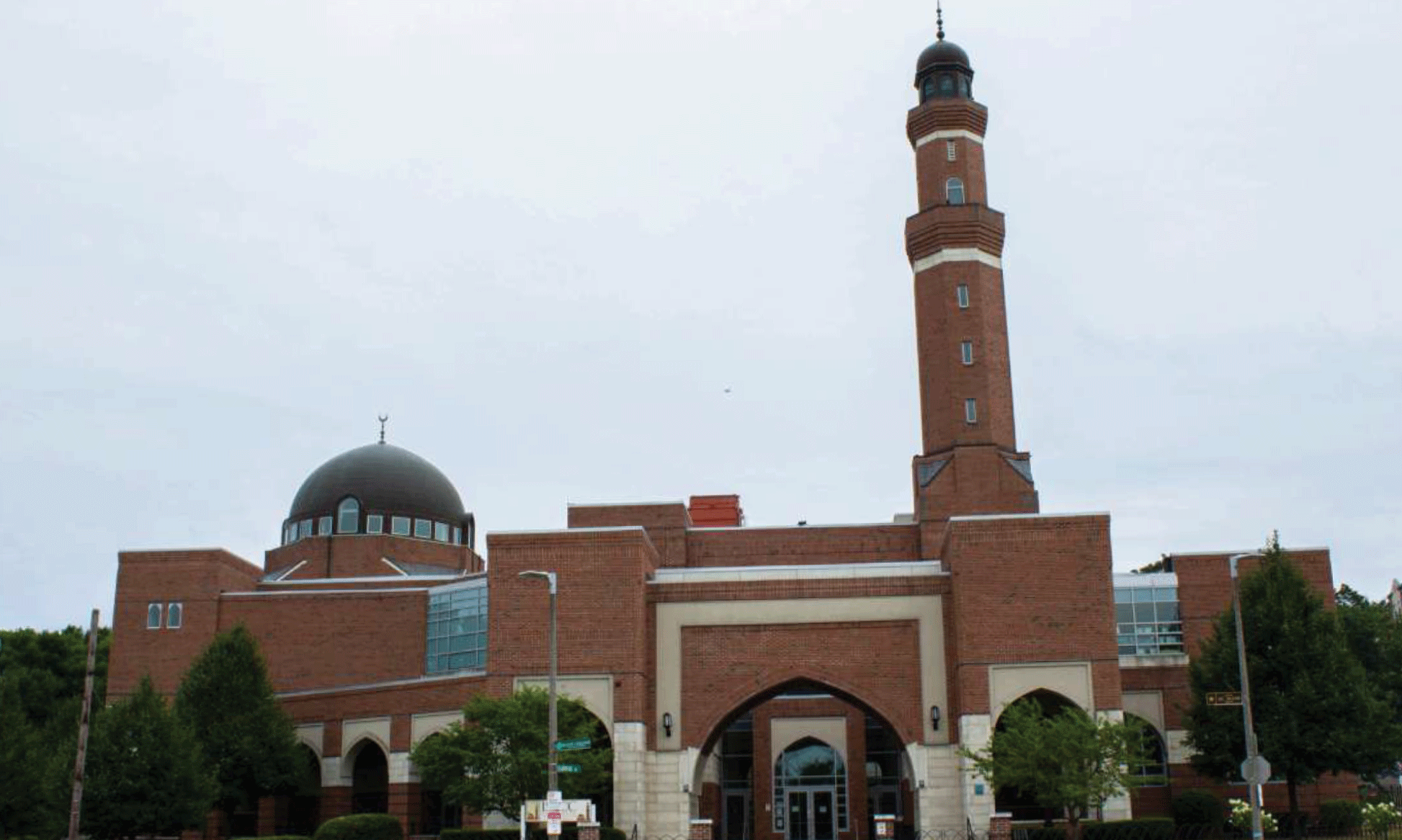
The ISB engaged Steffian Bradley and Associates, Inc (SBA), a prominent, Boston-based architecture firm, to develop the building plans. The firm hired a consultant, Dr. Sami Angawi, who created the building’s concept and vision. Dr. Angawi intentionally integrated the mosque's architecture with the surrounding neighborhood and region. Alongside traditional Islamic architectural motifs such as pointed arches, a 140-foot minaret, and a gilded dome, the center was constructed of red bricks emblematic of industrial New England and in keeping with other historic buildings in the neighborhood, such as Roxbury Community College.
Blending traditional Islamic elements, such as balance (mizan), with classic Roxbury materials also mirrors the experiences of ISBCC’s congregants, who retain a unique Muslim identity while contributing to the larger Boston community. The center’s location on Malcolm X Boulevard is also significant. While there are numerous streets named after Malcolm X, the one in Roxbury is the only one to feature his Muslim name, El-Hajj Malik El-Shabazz. His leadership helped unite American Muslims under the banner of mainstream Islam, which is particularly significant to Boston’s historic African-American Muslim community.
A center for all
of Boston
Taking the mounting challenges in stride, the ISB organization saw its community as a significant constituency. City and state officials began to notice.
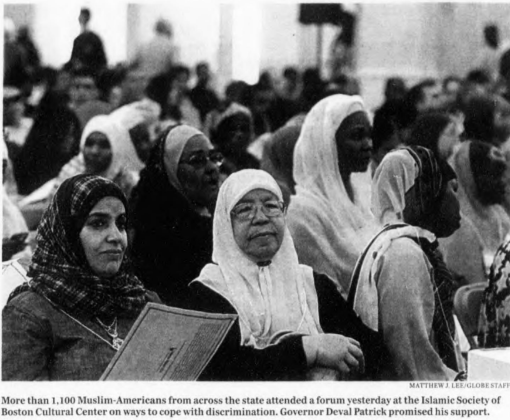
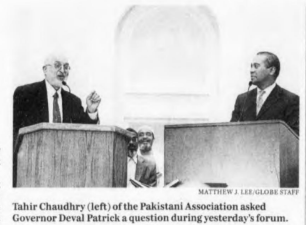
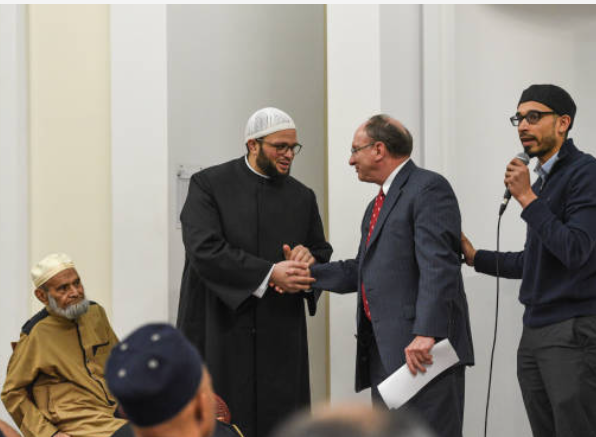
Governor Deval Patrick – 2010: On 23rd May, 2010, Governor Deval Patrick told more than 1,100 Muslims at the ISBCC in Roxbury that he would do everything in his power to combat discrimination and racial profiling and pledged to support Muslims in the state.
Mayoral Candidate’s Debate – 2013: In 2013, nine days before Boston voters chose the city’s next mayor to succeed Tom Menino, John R. Connolly and Martin J. Walsh attended a debate at the ISBCC in Roxbury as part of their citywide campaign at churches and synagogues.
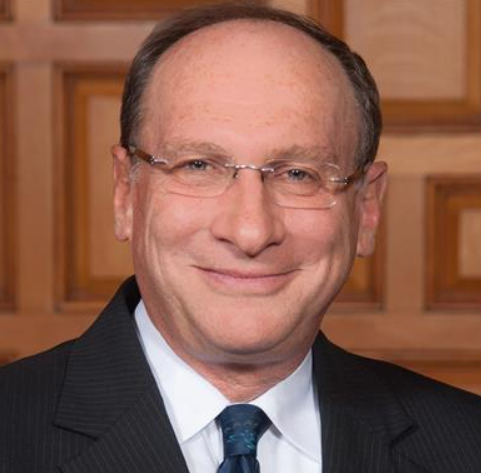
Chief Justice Ralph D. Gants – 2015: One of the largest audiences gathered at the ISBCC for Friday prayers came to hear the late Chief Justice Ralph D. Gants speak. On this special occasion, he delivered his remarks speaking "as a Jew". His words, "You do not stand alone" were meant to be reassuring.
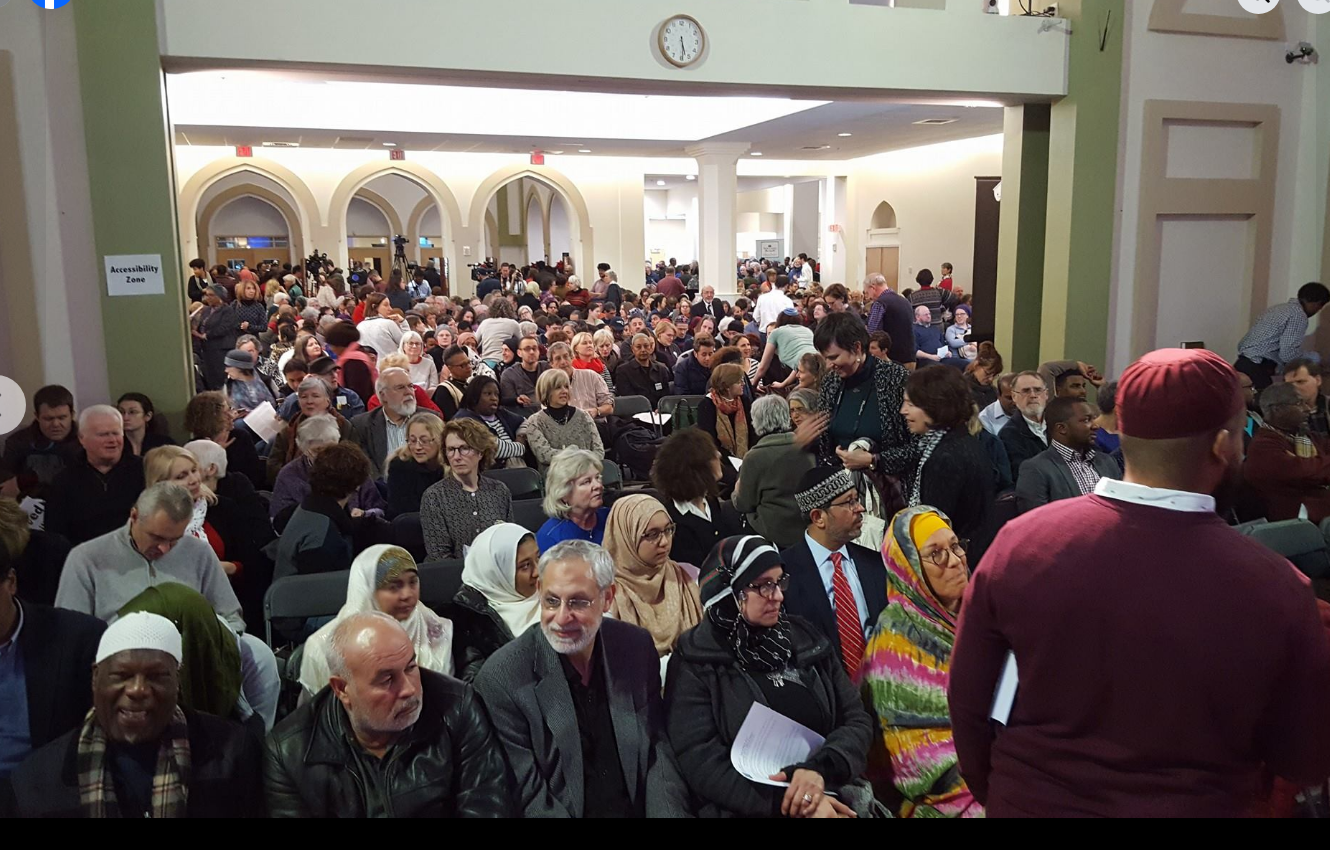
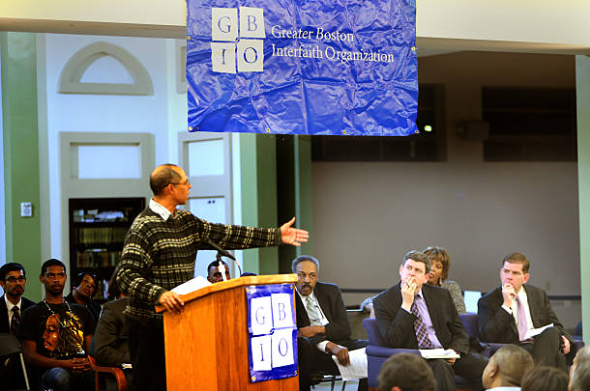
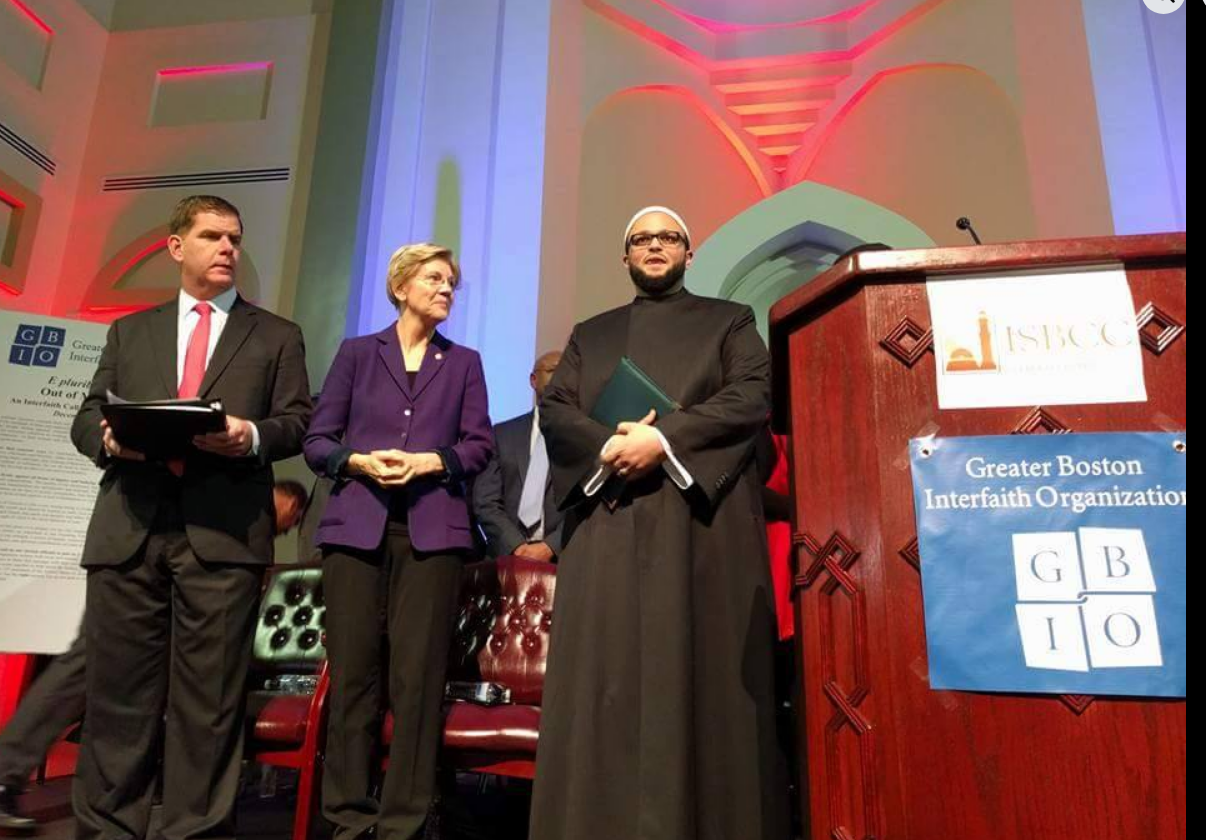
The Greater Boston Interfaith Organization (GBIO) – 2016: In 2016, the ISB organization delivered its message of peace and increased understanding by hosting the Greater Boston Interfaith Organization (GBIO). The interfaith rally that packed the ISBCC to protest bigotry and intolerance drew an estimated crowd of 2,600. Speakers who pledged to stand against bigotry and abuse included clergy and political leaders, such as Mayor Martin J. Walsh and Senator Elizabeth Warren.
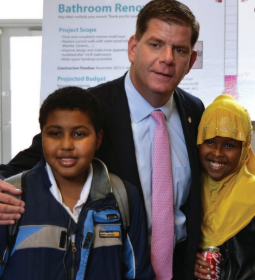
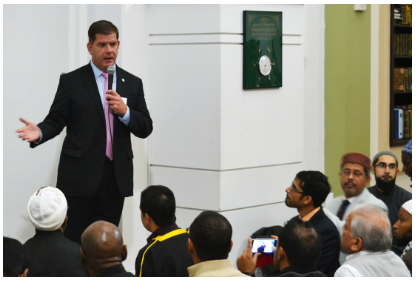
In 2017, after the Trump administration's executive orders on immigration, refugee status, and discrimination against Muslim countries, the ISBCC hosted a forum. Boston Mayor Martin J. Walsh attended and offered a passionate defense of immigration and religious diversity.
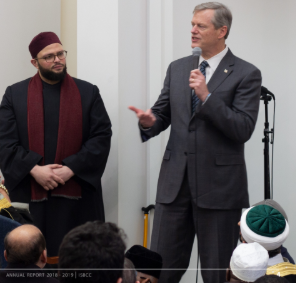
Governor Charles Baker – 2019: On February 1st, 2019, weeks into his second term, Governor Baker was the first sitting Republican governor in Massachusetts to appear at a Muslim house of worship. He graciously delivered a message of inclusion and the need to embrace community differences to hundreds of congregants at the Friday prayer service.
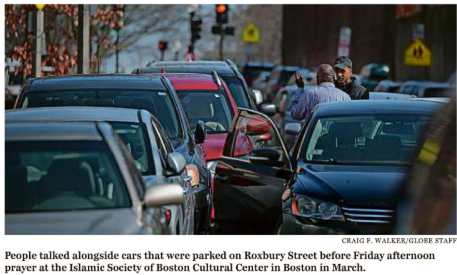
Boston’s Mayor Michelle Wu – 2022: After parking tickets had been issued to worshippers' cars at the ISBCC, Boston’s Mayor Wu relaxed routine parking enforcement around mosques on Fridays and Muslim holidays. A Muslim Boston City Council member brought it to Mayor Wu’s attention, requesting that the mosque be afforded the same leeway as church attendees on Sundays.
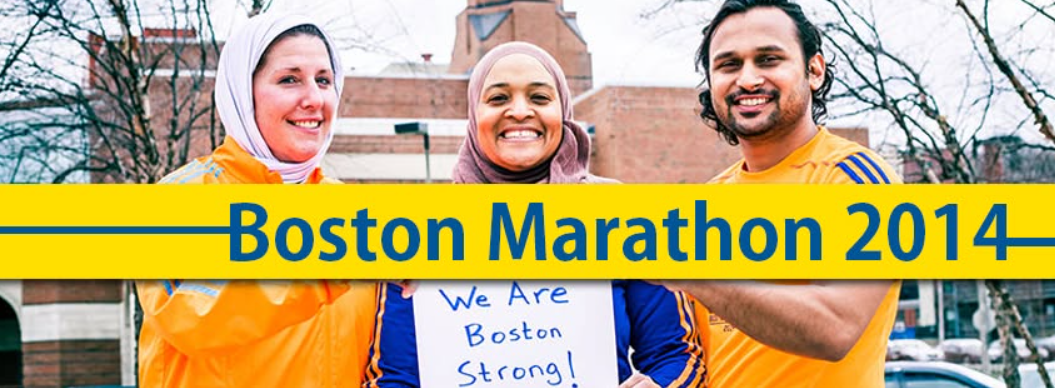
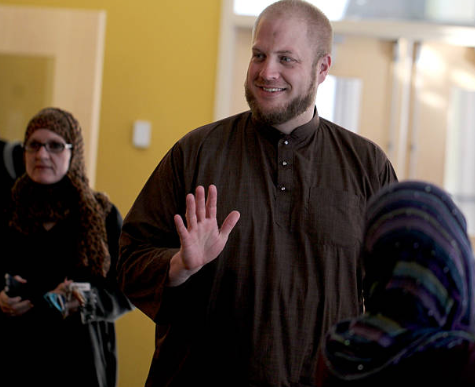
The selection of the ISBCC’s first official imam (religious leader) highlighted its commitment to young American Muslim leadership. Imam William Suhaib Webb successfully modernized the mosque’s youth engagement and public image. Before he was the imam, William grew up as a preacher's grandson in Oklahoma, attending Church of Christ services twice a week. He converted to Islam at the age of 20 after discovering the Qur'an. Nineteen years later, he was serving the ISBCC community as the resident scholar and imam. New challenges of Imam Webb’s role surfaced in 2013, after the tragic Boston Marathon Bombing. With the focus once again on Muslim communities nationwide, and especially in Boston, Imam Webb engaged the media as the representative of Boston’s American Muslims, who were “not just the other.” The Institute for Social Policy and Understanding (ISPU) researched and published a report on the ISB's astute handling of the crisis. For details, see: 2013 Boston Marathon Bombing.
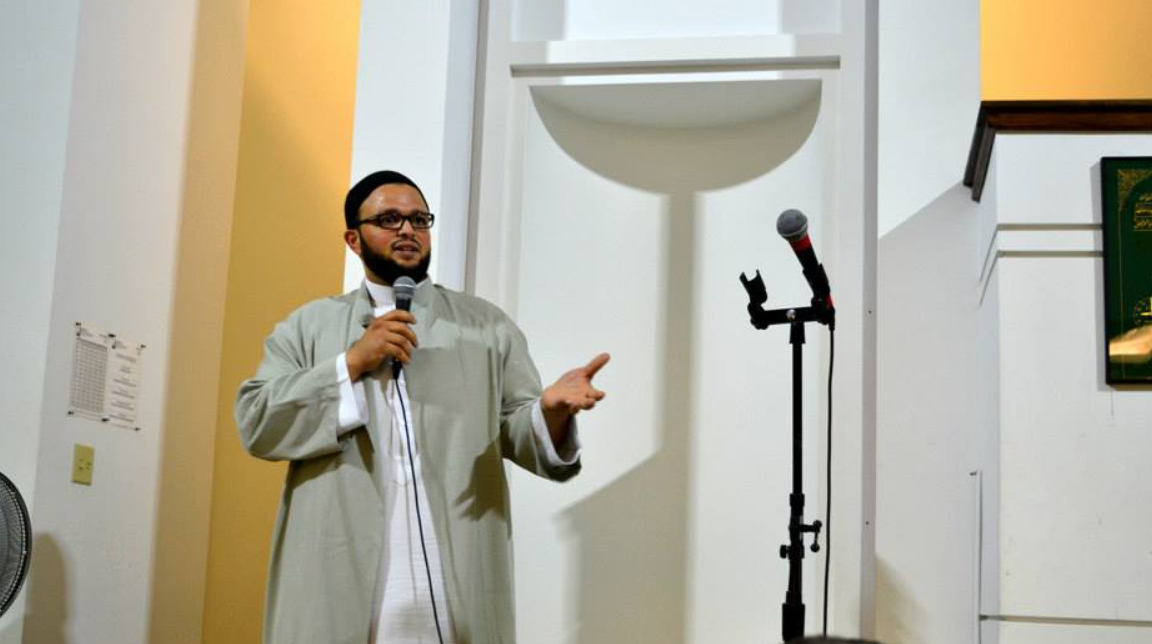
Due to its size and mission/vision, the ISBCC functioned best by employing three imams: a senior imam, an associate imam, and a qari. In 2015, Institute for Policy & Understanding (ISPU) published a case study on how the ISB organization effectively conducted a community-led search for a Senior Imam. The needs assessment of 20 distinct constituencies within the community reinforced the need for young American Muslim leadership. The ISB selected the youthful Shaykh Yasir Fahmy as Senior Imam, whose stated aims were to foster love and appreciation for the Islamic tradition among new generations of American Muslims.
ISB & Public
Health Challenges
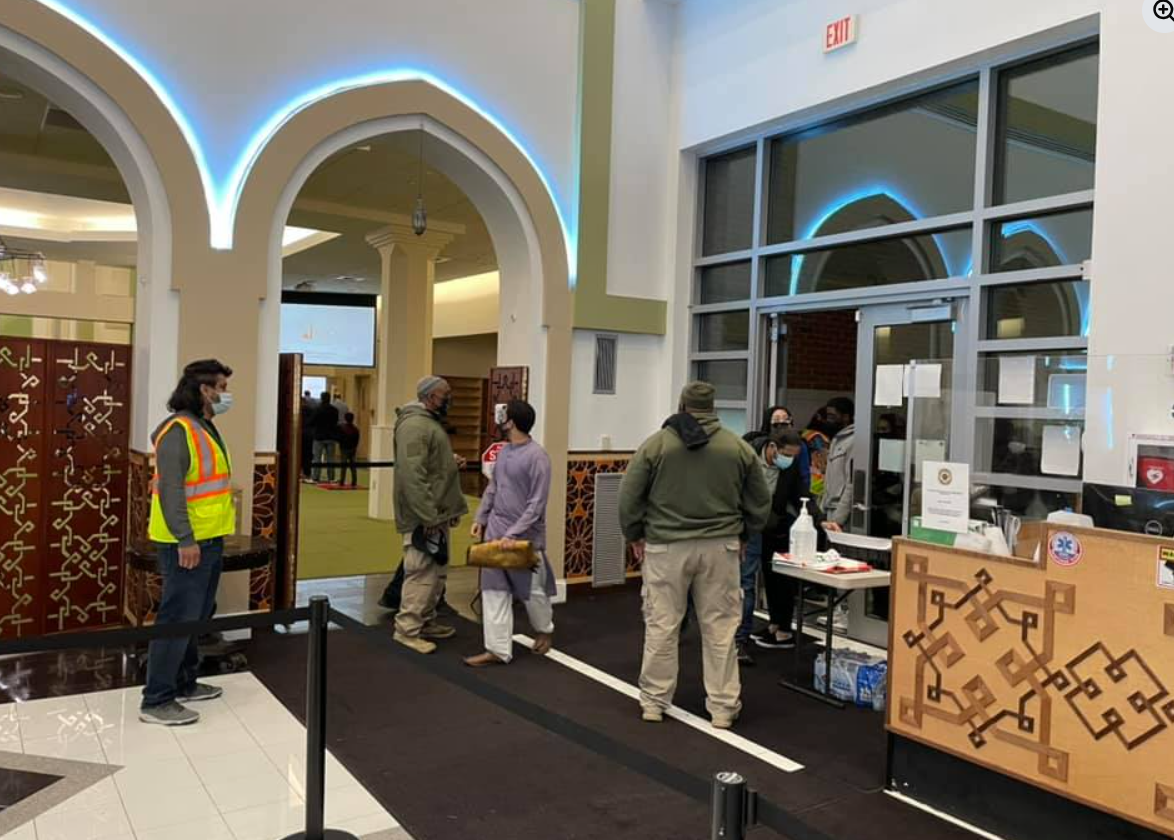
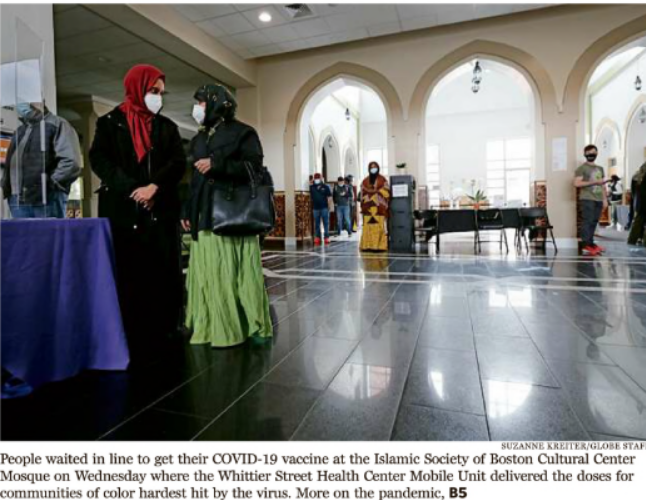
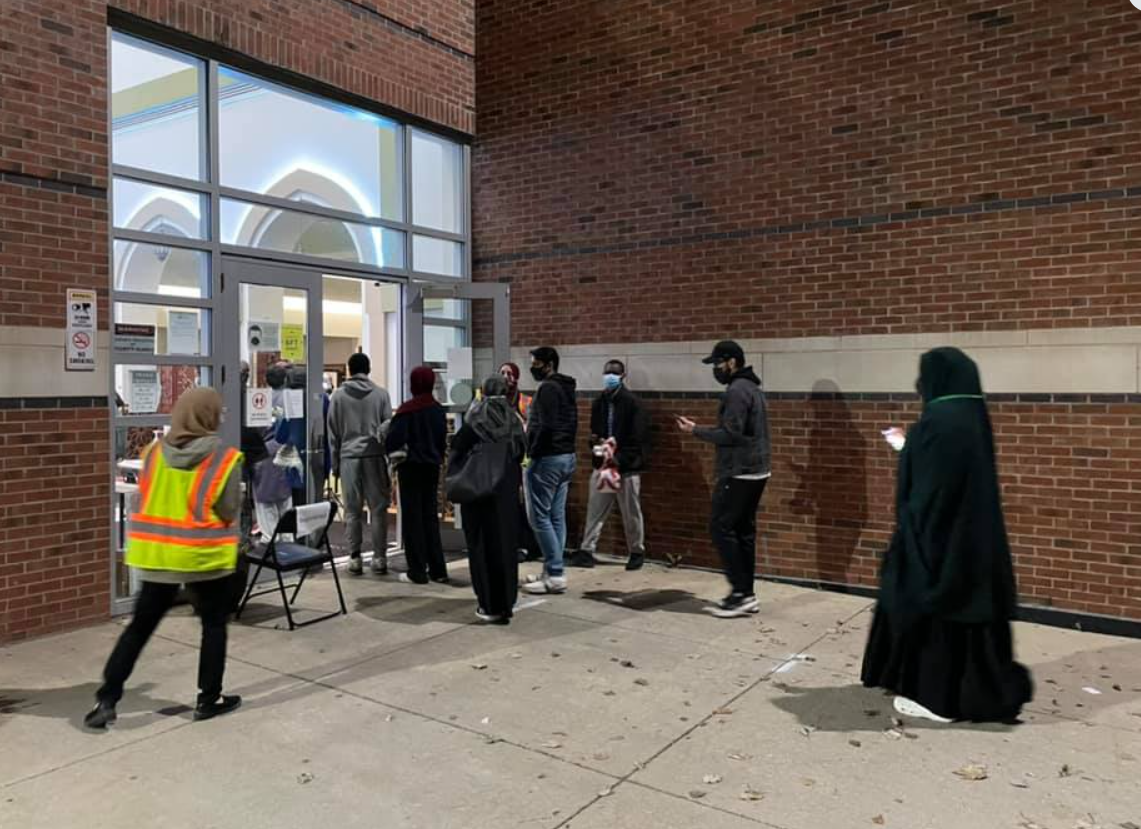
Due to the COVID-19 pandemic, attendance at ISB's two mosques was suspended for several months in 2020. Slowly, a certain percentage of congregants were allowed back to attend, following social distancing rules during prayers, wearing masks, having their temperatures checked at the door, and bringing their own prayer rugs. As the percentages increased over time, the leadership provided the community with a series of educational programs to raise awareness of the importance and efficacy of the vaccines, and hosted several health clinics, including one titled "Impact of Pandemic on Children's Mental Health."
One program at ISB, highlighted the role of Muslim slaves from West Africa who shared the Ottoman practice of vaccination against smallpox to Boston leaders. The ISBCC was also designated as an authorized vaccination site, administered by Whittier Street Health Center.
In an effort to maintain community space, the ISBCC transitioned critical programs to virtual formats to ensure continuity and support for the community. Innovative online programs were created to ease the challenges such as loss of life, isolation and loneliness, temporary loss of physical and spiritual locations, and financial strains. The ISB created a fully equipped media green room in Roxbury for online broadcasts, including live Friday and Eid prayers.
The ISB leaders also provided technical support and helped manage funds for other local mosques and organizations to improve their operations and services. Beyond the local area, the ISB organization served a diverse community, including students and transients from distant lands, establishing its mission's broader national impact.
The Islamic concept
of Endowment (Waqf)
Since its early years, the ISB organization has utilised the Islamic concept of waqf — translated as "endowment" in Arabic — to support its mission and operations as a non-profit, while adhering to the Islamic value of ethical stewardship of resources.
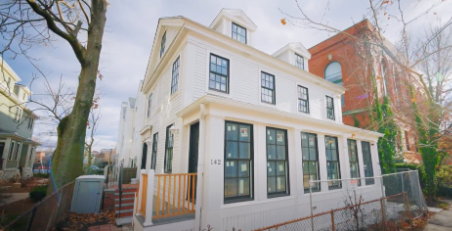
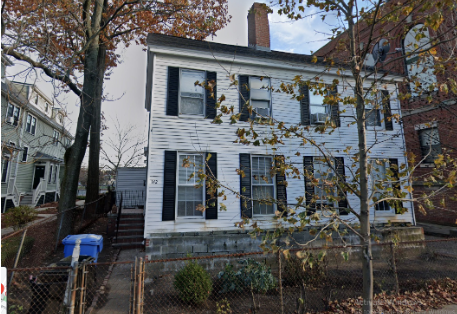
In 1992, members of the community purchased property on Prospect Street in Cambridge and donated it to the ISB in 1994. That property was completely renovated into five modern townhouses in 2023. For preserving the properties' original architecture, the ISB won the Preservation Award from the Cambridge Historical Commission in 2023.
Another endowment, a commercial property at 166–172 Prospect Street in Cambridge, Massachusetts, was sold in 2006, in order to fund the construction of the ISB Cultural Center. In accordance with Islamic stewardship of resources, the ISB non-profit organization is obligated to use any waqf profits to support its mission and operations.
In August 2021, substantial donations from ISB trustees helped the organization acquire a revenue-generating residential property in Florida. The Florida property was later sold in December 2023; the proceeds were used to strengthen the endowments.
ISB: Present-Day
Vision and Growth
Today, the ISB organization has become a model of transparency and civic engagement for the American Muslim community nationwide. It continues to develop and strengthen its unique role as a Muslim non-profit organization that adheres to Islamic principles, maintains key relationships with neighboring mosques, students, the interfaith community, and remains a relevant constituency to city, state, and national officials.
The ISBCC in Roxbury currently offers burial services, weekly religious study circles (halaqas), special programming for converts, marriage counseling, networking opportunities for young professionals, college programs, youth group events (for teens), programs to empower small businesses, and partners with relief social services, including food supplies and funding for the local community. The ISB organization looks forward to expanding and working with potential future partnerships, which may include an academic institution.
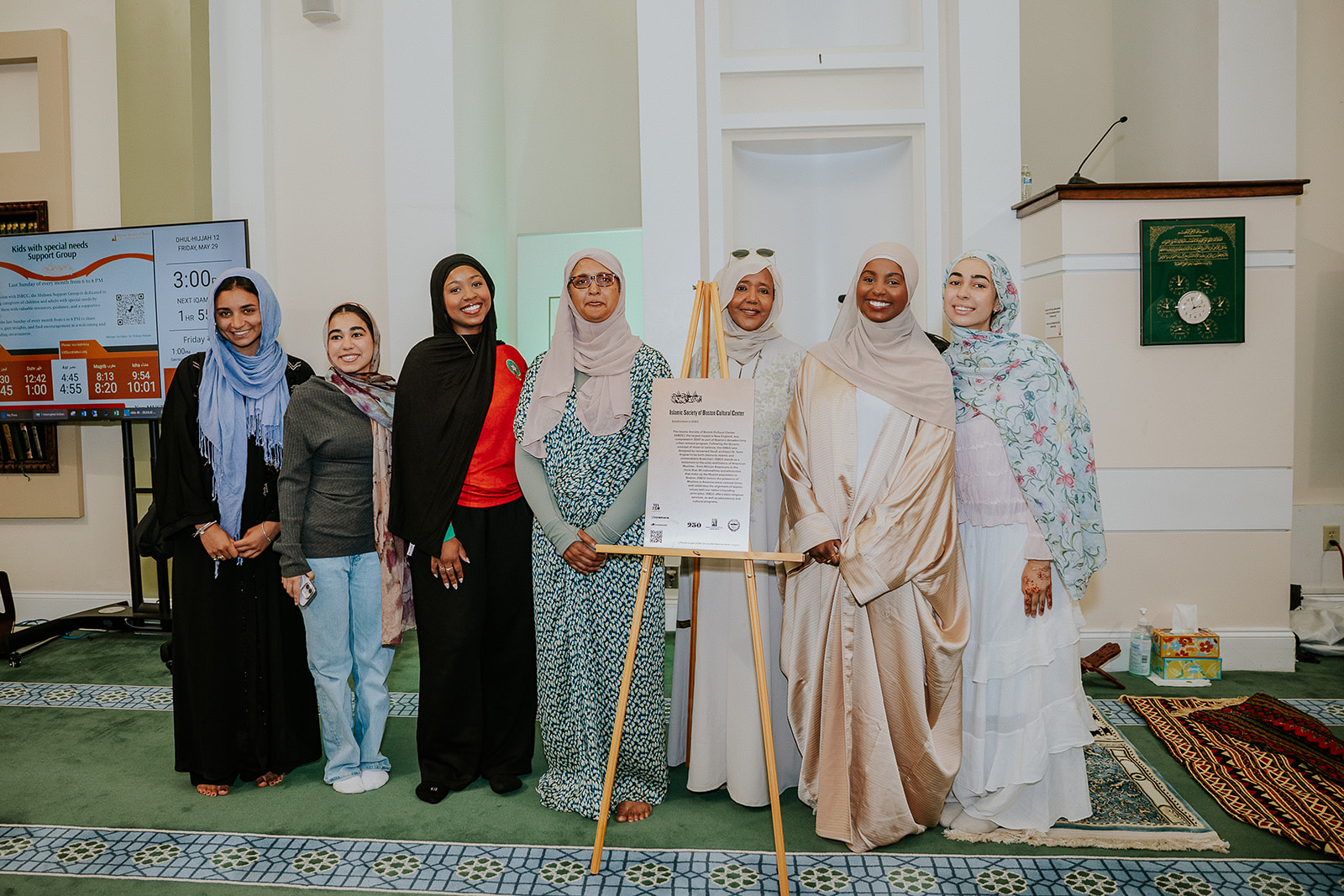
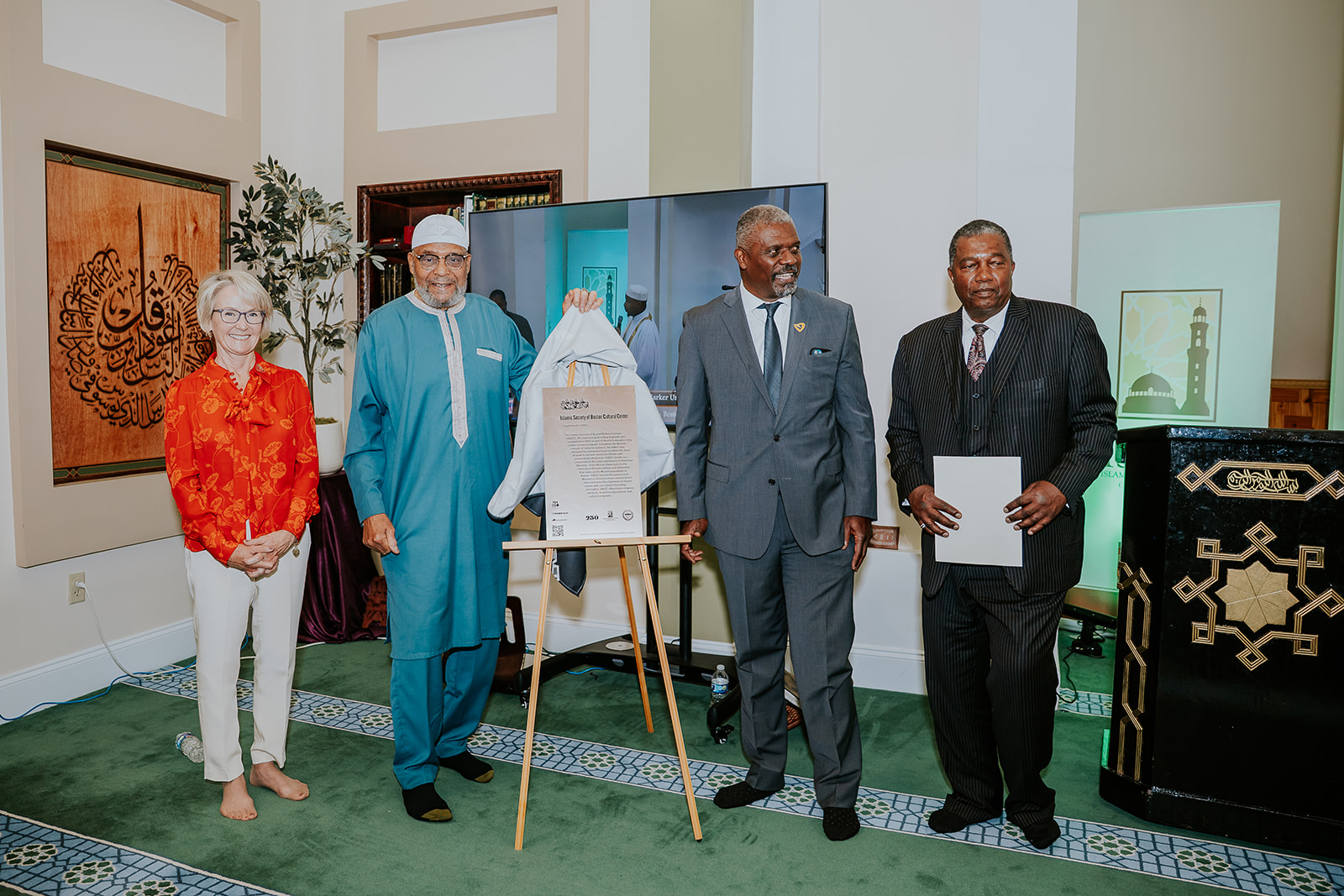
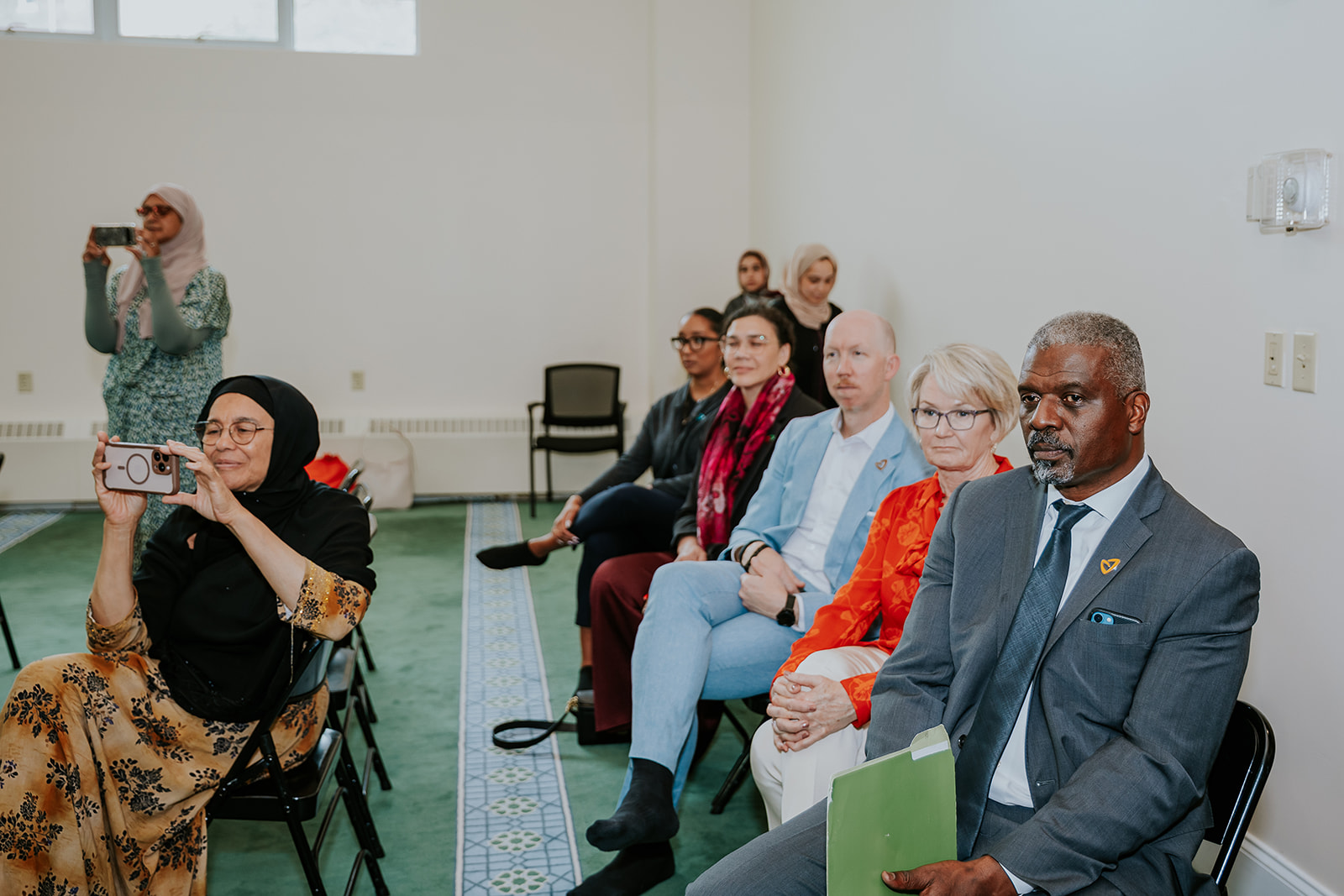
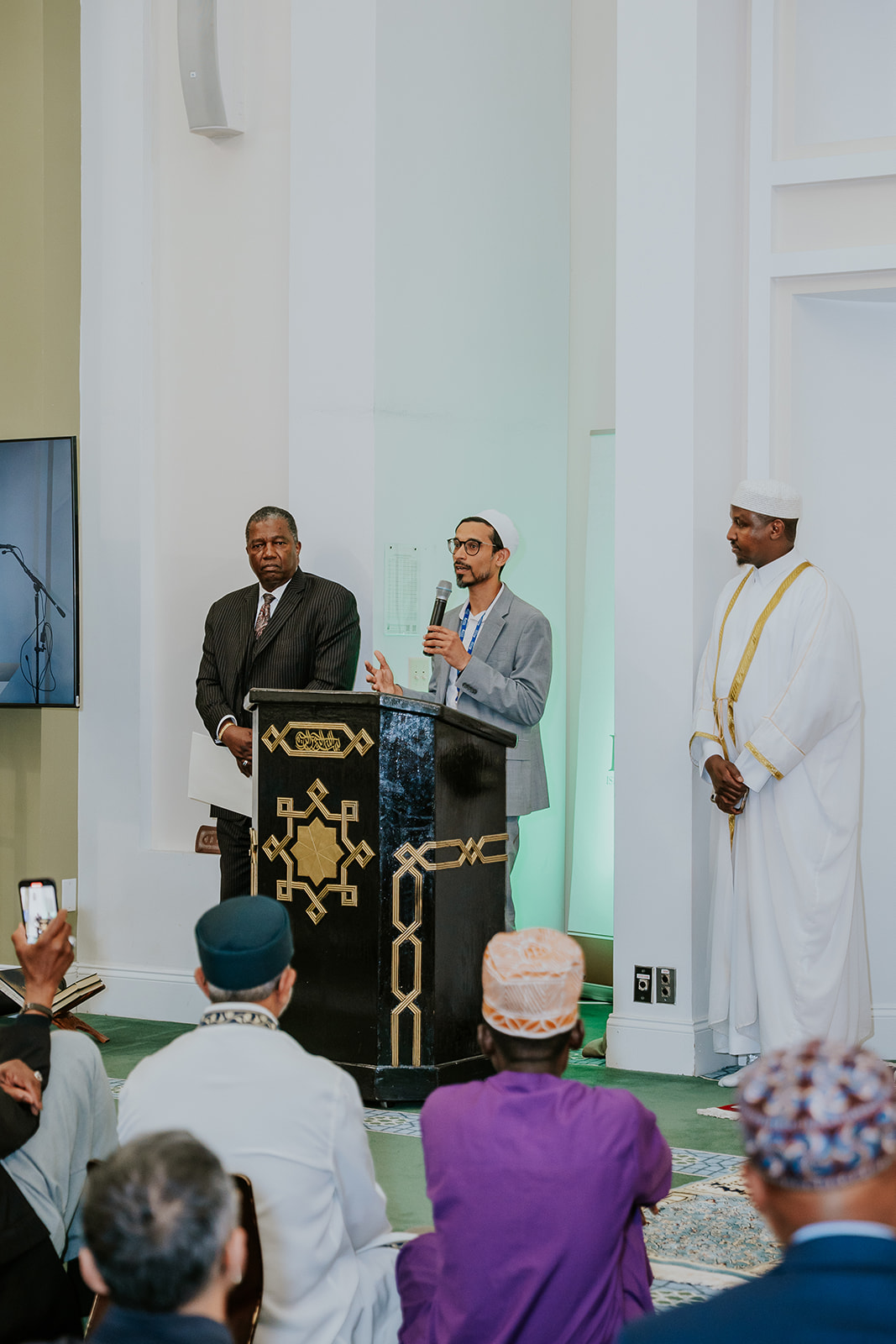
As part of the United States' 250th Anniversary – celebrated in July 2026, the ISBCC was designated as one of Boston's Historical Markers by the City of Boston and Embrace Boston. As the only Muslim building and organization to be so honored, this landmark historical marker can be seen as the culmination of the ISB’s vision to represent the American Muslims of Boston and nationwide. It will further enhance the visibility of the ISBCC as a destination for visitors from around the city, country, and world. Embrace Boston is the group that developed "The Embrace," a 20-ton bronze sculpture that pays tribute to Martin Luther King Jr. and his family. The sculpture is located in the historic Boston Common, where Dr. King and his wife, Coretta Scott, had their first date. The ISBCC will display a plaque to commemorate the honor and affirm the mosque's historic roots on America’s religious landscape. Details of Boston’s inclusive program, Everyone250, and a list of other site participants, can be found here: Learn more at Everyone250.org ↗
Contribute to Our History
Were you there? Long-time community members can add their voice — upload old photographs, share voice notes, or write your memory. Your contribution may appear on this page.
Go to the full page to view and submit the form.
Islamic Society of Boston Cultural Center
The Building as Story
Tap a glowing point on the building — or use the buttons below — to explore each space
The minaret is more than a tower — it is nearly two decades of legal battles made stone. At 140 feet, it is the tallest minaret in New England. Opposition groups argued its height violated Boston zoning; community lawyers and an unprecedented interfaith coalition argued the opposite. After years of appeals and public hearings, a 5,000-pound copper canopy was hoisted by crane in 2007 — the community's declaration that perseverance, not power, builds lasting things. When the Imam called the first Athan from its base, between 2,000 and 3,000 Muslims gathered in prayer outside on Malcolm X Boulevard.
The grand prayer hall beneath the central dome holds over 1,000 worshippers at Friday Jumu'ah — and approximately 10,000 across multiple sessions on Eid. Acoustically designed so the Imam's voice carries to every corner without amplification, the space draws on classical Ottoman and Andalusian mosque architecture. Geometric tilework was installed by artisans from Morocco. The gilded dome, designed by architect Dr. Sami Angawi, integrates Islamic motifs with the red-brick industrial vernacular of Roxbury.
The ISBCC library grew from a few bookshelves in the ISB Cambridge basement to thousands of volumes in Islamic studies, history, languages, and sciences. It hosts tutoring programmes, the Islamic Sunday School, and an expanding digital archive. Every donated book carries a story — many bear dedications from Boston's earliest Muslim families. The library embodies the educational mission that has defined the ISB since its founding graduate students gathered in Cambridge in the early 1980s.
Decades of Eid celebrations, Iftar gatherings, community dinners, and landmark interfaith events have unfolded here. After the 2013 Boston Marathon Bombing, the ISBCC opened these doors for a city-wide interfaith vigil attended by representatives of every major faith community in Greater Boston. The hall has witnessed weddings, graduations, political forums, and the annual Halal Food Festival — a beloved Boston institution. In 2016, it hosted the GBIO rally against bigotry, drawing an estimated 2,600 people including Mayor Walsh and Senator Elizabeth Warren.
The grand arched entrance was designed as a statement of welcome — open to Muslim and non-Muslim alike. The ISBCC runs a formal tours programme for students, civic groups, and interfaith delegations from around the world. The horseshoe arch and the building's orientation toward the Qibla were intentional choices by architect Dr. Sami Angawi. The entrance embodies the founding vision: a centre that belongs to all of Boston. As part of the US 250th Anniversary, the building will receive a commemorative plaque at its entrance affirming its historic roots on America's religious landscape.
[Photo: Main entrance facade]
[Blueprint: Entrance arch detail — Dr. Sami Angawi / Br Helal Alwaz]
Islamic Society of Boston · Est. 1981
A Community's Journey
Across Five Decades
From the first mosque in Quincy (City of Presidents) to the largest mosque in New England, located on Malcolm X Boulevard in Roxbury, this is the living story of a community of faith, resilience, and belonging.
A vibrant and engaged
American Muslim community
The Islamic Society of Boston (ISB) is a vibrant and engaged American non-profit organization that adheres to Islamic principles. It owns and operates two mosques (masjids): the ISB mosque, located at 204 Prospect Street, Cambridge, Massachusetts, which serves approximately 300 people at weekly Friday prayers (jum'ah); and the ISB Cultural Center (ISBCC), currently the largest mosque in New England, located in the historic inner-city neighborhood of Roxbury, Massachusetts, on 100 Malcolm X Blvd.
The ISBCC serves approximately 1,700 congregants at Friday prayers each week. On major Islamic holidays (Eids), in collaboration with multiple other local mosques, ISB holds multiple sessions to accommodate approximately 10,000 worshipers. The ISB also owns residential property as part of its endowment (waqf). For preserving the Cambridge property's original architecture, the ISB won the Preservation Award from the Cambridge Historical Commission in 2023.
ISB's vision is to build a community of leaders rooted in the Islamic tradition, committed to American ideals, and empowered to serve the common good. A diverse and substantial number of Muslims in Massachusetts helped establish and develop the ISB organization so it can fulfil its mission to teach and live Islam in America.
Origins of the Islamic
Society of Boston (ISB)
Beginning with the Immigration & Nationality Act of 1965, passed by Congress, a new wave of students and professionals from more than fifty Muslim countries came to America to work and study in cities like Boston and Cambridge. To preserve their religious identity, the Muslim international students and professionals traveled by train and bus to the first dedicated mosque built in Quincy, Massachusetts, The Islamic Center of New England (click to learn more). The center was founded in 1964 by American Muslims, whose parents had emigrated from Lebanon at the turn of the 20th century and settled in Quincy to work at the Fore River Shipyard. The new leaders with their knowledge of Islam were a welcome addition to the isolated community. They volunteered to teach religion and Qur’anic Arabic at the Sunday school and also served on the Board of Directors.
As the decades passed, these international graduate students and their families established their Muslim-American identity in cities and suburbs across the state. In 1982, a core group officially incorporated a non-profit organization, the Islamic Society of Boston. In 1993 they purchased the Knights of Columbus building at 204 Prospect Street, Cambridge Massachusetts. In 1995, after completing renovations, the first mosque in Cambridge officially opened for prayers and was quickly filled with the growing Cambridge Muslim community.
An abandoned lot.
A sacred duty.
A similar story of growth was taking place in Boston. The Muslim Council of Boston (MCB)
(click to learn more), a non-profit organization, was incorporated in 1988 by Boston’s African American Muslim leaders, Imam Al-Hajj Abdul Zahir Dawud Ahmad, Yusuf Abdul Hakim, Imam Taalib Mahdi, and Imam Abdullah Taalib Faaruuq. These leaders had seen their two historic, community mosques in Boston and Dorchester reach capacity, and envisioned building a new mosque to encourage greater spiritual and cultural development of Boston’s Muslim community.
In 1989, the MCB successfully acquired a parcel (Parcel R-14) of abandoned land in Roxbury, an area of predominantly African American neighborhoods affected by urban blight and other issues. The land was part of the larger Boston Redevelopment Authority (BRA) redevelopment plan, led by the late Muhammad Ali-Salaam (click to learn more) , the BRA’s Deputy Director of Community Planning and Special Projects.
Even with their efforts to raise the millions of dollars needed to build a mosque, by 1998, Parcel R-14 remained undeveloped, and the MCB was at risk of losing the land. As the Cambridge Mosque was steadily outgrowing its facilities, the MCB and Muhammed Ali-Salaam approached the ISB leaders and other members of the Islamic Council of New England (incorporated in 1984), an organization with approximately 20 member mosques at the time, to help raise the necessary funds.
Muslims have always held to the traditional view that acquiring land and constructing a mosque are sacred duties involving faith, patient perseverance (sabr), and prayer. When approached by the MCB, the ISB’s leadership regarded the request as a once-in-a-lifetime opportunity to address the fast-growing Muslim population in Boston and Cambridge and provide adequate worship space and educational facilities. In August 2000, the BRA approved the final redesignation of the land to the ISB non-profit organization, along with some minor planning modifications and obligations.
The post-9/11
years of opposition
Following the heinous attacks of September 11, 2001, and the immediate national atmosphere of suspicion of Muslims, the ISB leadership, made up of Muslim graduate students and their families from more than 30 countries, became the targets of Islamophobic attacks from some vocal quarters. The Islamophobic group, consisting of self-proclaimed experts on radical Islam and Islamic terrorism, was joined by media outlets and reporters to embroil the ISB leadership in multiple lawsuits (2003 to 2007), which led to the suspension of construction on the abandoned land (Parcel R-14).
See details: The Journey of Faith & Resilience (click to learn more).
In 2005, the ISB organization launched a nine-point countersuit against 17 defendants, including eight media entities and civil conspirators. The countersuit claimed that the plaintiff had engaged in intentional, reckless, and/or negligent reporting and the defamation and intimidation of its leadership. In 2007, following a negotiated legal settlement, all legal cases were dropped.
The ISB declared it a legal victory for religious freedom.
Despite the atmosphere of intolerance, the ISB’s building project in Roxbury enjoyed widespread community support. Boston’s Mayor Thomas Menino, the city’s longest-serving mayor, and other prominent and respected figures recognized that the cultural center would serve the needs of the rapidly growing Muslim population in the Greater Boston area. Supporters of the project were also aware that for decades, the MCB and ISB leaders had been promoting increased understanding of Islam in the community through interfaith dialogue.
Boston stands
together
The groundbreaking ceremony was attended by Mayor Thomas Menino, Boston City Councilman Chuck Turner, U.S. Representative Michael E. Capuano, and religious leaders including Bishop Filipe Teixeira of the Catholic Church of the Americas, and Imam Talal Eid of the Islamic Center of New England in Quincy and Sharon, Massachusetts. By 2004, construction was underway.
Sample of construction photos (click to learn more)
On June 27, 2007, an Intercommunity Solidarity Day was held at the site of the unfinished ISBCC building. Approximately 300 faith and community leaders, academics, civil rights leaders, and elected officials attended. The event included representatives from the Cardinal, support from the Massachusetts Council of Churches, from dozens of Jewish leaders, rabbis, congregation members, the President Emeritus of the Black Ministerial Alliance, the NAACP, City Councilors, the current State Senator, the ACLU, the ADC, and the various Imams of the Boston area. All spoke about the importance of intercommunity cooperation and their joy at seeing the mosque overcome challenges to become established. A group of young Jewish community activists who started the website Jewssupportthemosque.org presented the ISB with a $2,000 cheque they raised online.
Raising
the Minaret
By 2007, after two decades, the Muslim communities of Greater Boston and New England rejoiced at the Minaret Capping Ceremony of its landmark mosque in Roxbury.
Over 2,500 Muslims gathered outside the mosque to pray, while other members of the Boston community came to share in the joyous occasion. A 5,000-pound copper canopy (supported by the American flag) was hoisted by a crane and lowered onto the 140-foot-high minaret, and the ISB’s Imam called the faithful to prayer (the athan). This momentous occasion paved the way for continued construction.
On September 28, 2007, the first prayers were held inside the ISBCC. Although the construction of the ISBCC was incomplete, the leadership received a temporary permit from the city allowing the Muslim community to use the building for prayers during Ramadan. More than 2,000 congregants and supporters from across New England attended, including a delegation of students from the Harvard Islamic Society (HIS).
In September 2008, the ISB leadership selected the MAS Boston chapter of the Muslim American Society to manage newly built ISB Cultural Center operations and fundraising for a five-year term, with a possibility for an additional five-year term. At the time, MAS Boston was the largest grassroots Muslim organization in Massachusetts, with a dedicated membership base statewide and a network of over 50 chapters nationwide. Their ten-year collaboration (2008–2018) enabled the ISB Cultural Center to deliver the moderate, peaceful message of Islam in Greater Boston and helped each organization expand its reach and impact.
The doors open.
The Athan rises over Roxbury.
To celebrate the completion of the ISBCC building in Roxbury, an inauguration ceremony was held on June 26, 2009. It included an interfaith breakfast, a prayer service, and a ribbon-cutting by Mayor Menino. The public ceremony was attended by a large crowd and featured speeches by prominent figures, including the first Muslim Congressman, U.S. Representative Keith Ellison and William A. Graham, Dean of Harvard Divinity School.
The ISBCC, located in Roxbury, is a 70,000 sq ft mosque and cultural center. It is surrounded by some of the world's top schools and universities. Due to its size and unique profile as part of an American Muslim non-profit organization, the ISBCC is more than just a place of worship. It serves as a cultural center for countless others in the Boston community and beyond, and attracts a diverse congregation spanning racial, ethnic, educational, and socioeconomic backgrounds. The building houses a worship space, an Islamic Sunday school, a cafe, facilities for washing the deceased and Islamic funeral preparations, and a multipurpose space for community functions, programs, and events.
The ISB engaged Steffian Bradley and Associates, Inc (SBA), a prominent, Boston-based architecture firm, to develop the building plans. The firm hired a consultant, Dr. Sami Angawi, who created the building’s concept and vision. Dr. Angawi intentionally integrated the mosque's architecture with the surrounding neighborhood and region. Alongside traditional Islamic architectural motifs such as pointed arches, a 140-foot minaret, and a gilded dome, the center was constructed of red bricks emblematic of industrial New England and in keeping with other historic buildings in the neighborhood, such as Roxbury Community College.
Blending traditional Islamic elements, such as balance (mizan), with classic Roxbury materials also mirrors the experiences of ISBCC’s congregants, who retain a unique Muslim identity while contributing to the larger Boston community. The center’s location on Malcolm X Boulevard is also significant. While there are numerous streets named after Malcolm X, the one in Roxbury is the only one to feature his Muslim name, El-Hajj Malik El-Shabazz. His leadership helped unite American Muslims under the banner of mainstream Islam, which is particularly significant to Boston’s historic African-American Muslim community.
A center for all
of Boston
Taking the mounting challenges in stride, the ISB organization saw its community as a significant constituency. City and state officials began to notice.
Governor Deval Patrick – 2010: On 23rd May, 2010, Governor Deval Patrick told more than 1,100 Muslims at the ISBCC in Roxbury that he would do everything in his power to combat discrimination and racial profiling and pledged to support Muslims in the state.
Mayoral Candidate’s Debate – 2013: In 2013, nine days before Boston voters chose the city’s next mayor to succeed Tom Menino, John R. Connolly and Martin J. Walsh attended a debate at the ISBCC in Roxbury as part of their citywide campaign at churches and synagogues.
Chief Justice Ralph D. Gants – 2015: One of the largest audiences gathered at the ISBCC for Friday prayers came to hear the late Chief Justice Ralph D. Gants speak. On this special occasion, he delivered his remarks speaking "as a Jew". His words, "You do not stand alone" were meant to be reassuring.
The Greater Boston Interfaith Organization (GBIO) – 2016: In 2016, the ISB organization delivered its message of peace and increased understanding by hosting the Greater Boston Interfaith Organization (GBIO). The interfaith rally that packed the ISBCC to protest bigotry and intolerance drew an estimated crowd of 2,600. Speakers who pledged to stand against bigotry and abuse included clergy and political leaders, such as Mayor Martin J. Walsh and Senator Elizabeth Warren.
In 2017, after the Trump administration's executive orders on immigration, refugee status, and discrimination against Muslim countries, the ISBCC hosted a forum. Boston Mayor Martin J. Walsh attended and offered a passionate defense of immigration and religious diversity.
Governor Charles Baker – 2019: On February 1st, 2019, weeks into his second term, Governor Baker was the first sitting Republican governor in Massachusetts to appear at a Muslim house of worship. He graciously delivered a message of inclusion and the need to embrace community differences to hundreds of congregants at the Friday prayer service.
Boston’s Mayor Michelle Wu – 2022: After parking tickets had been issued to worshippers' cars at the ISBCC, Boston’s Mayor Wu relaxed routine parking enforcement around mosques on Fridays and Muslim holidays. A Muslim Boston City Council member brought it to Mayor Wu’s attention, requesting that the mosque be afforded the same leeway as church attendees on Sundays.
The selection of the ISBCC’s first official imam (religious leader) highlighted its commitment to young American Muslim leadership. Imam William Suhaib Webb successfully modernized the mosque’s youth engagement and public image. Before he was the imam, William grew up as a preacher's grandson in Oklahoma, attending Church of Christ services twice a week. He converted to Islam at the age of 20 after discovering the Qur'an. Nineteen years later, he was serving the ISBCC community as the resident scholar and imam. New challenges of Imam Webb’s role surfaced in 2013, after the tragic Boston Marathon Bombing. With the focus once again on Muslim communities nationwide, and especially in Boston, Imam Webb engaged the media as the representative of Boston’s American Muslims, who were “not just the other.” The Institute for Social Policy and Understanding (ISPU) researched and published a report on the ISB's astute handling of the crisis. For details, see: 2013 Boston Marathon Bombing.
Due to its size and mission/vision, the ISBCC functioned best by employing three imams: a senior imam, an associate imam, and a qari. In 2015, Institute for Policy & Understanding (ISPU) published a case study on how the ISB organization effectively conducted a community-led search for a Senior Imam. The needs assessment of 20 distinct constituencies within the community reinforced the need for young American Muslim leadership. The ISB selected the youthful Shaykh Yasir Fahmy as Senior Imam, whose stated aims were to foster love and appreciation for the Islamic tradition among new generations of American Muslims.
ISB & Public
Health Challenges
Due to the COVID-19 pandemic, attendance at ISB's two mosques was suspended for several months in 2020. Slowly, a certain percentage of congregants were allowed back to attend, following social distancing rules during prayers, wearing masks, having their temperatures checked at the door, and bringing their own prayer rugs. As the percentages increased over time, the leadership provided the community with a series of educational programs to raise awareness of the importance and efficacy of the vaccines, and hosted several health clinics, including one titled "Impact of Pandemic on Children's Mental Health."
One program at ISB, highlighted the role of Muslim slaves from West Africa who shared the Ottoman practice of vaccination against smallpox to Boston leaders. The ISBCC was also designated as an authorized vaccination site, administered by Whittier Street Health Center.
In an effort to maintain community space, the ISBCC transitioned critical programs to virtual formats to ensure continuity and support for the community. Innovative online programs were created to ease the challenges such as loss of life, isolation and loneliness, temporary loss of physical and spiritual locations, and financial strains. The ISB created a fully equipped media green room in Roxbury for online broadcasts, including live Friday and Eid prayers.
The ISB leaders also provided technical support and helped manage funds for other local mosques and organizations to improve their operations and services. Beyond the local area, the ISB organization served a diverse community, including students and transients from distant lands, establishing its mission's broader national impact.
The Islamic concept
of Endowment (Waqf)
Since its early years, the ISB organization has utilised the Islamic concept of waqf — translated as "endowment" in Arabic — to support its mission and operations as a non-profit, while adhering to the Islamic value of ethical stewardship of resources.
In 1992, members of the community purchased property on Prospect Street in Cambridge and donated it to the ISB in 1994. That property was completely renovated into five modern townhouses in 2023. For preserving the properties' original architecture, the ISB won the Preservation Award from the Cambridge Historical Commission in 2023.
Another endowment, a commercial property at 166–172 Prospect Street in Cambridge, Massachusetts, was sold in 2006, in order to fund the construction of the ISB Cultural Center. In accordance with Islamic stewardship of resources, the ISB non-profit organization is obligated to use any waqf profits to support its mission and operations.
In August 2021, substantial donations from ISB trustees helped the organization acquire a revenue-generating residential property in Florida. The Florida property was later sold in December 2023; the proceeds were used to strengthen the endowments.
ISB: Present-Day
Vision and Growth
Today, the ISB organization has become a model of transparency and civic engagement for the American Muslim community nationwide. It continues to develop and strengthen its unique role as a Muslim non-profit organization that adheres to Islamic principles, maintains key relationships with neighboring mosques, students, the interfaith community, and remains a relevant constituency to city, state, and national officials.
The ISBCC in Roxbury currently offers burial services, weekly religious study circles (halaqas), special programming for converts, marriage counseling, networking opportunities for young professionals, college programs, youth group events (for teens), programs to empower small businesses, and partners with relief social services, including food supplies and funding for the local community. The ISB organization looks forward to expanding and working with potential future partnerships, which may include an academic institution.
As part of the United States' 250th Anniversary – celebrated in July 2026, the ISBCC was designated as one of Boston's Historical Markers by the City of Boston and Embrace Boston. As the only Muslim building and organization to be so honored, this landmark historical marker can be seen as the culmination of the ISB’s vision to represent the American Muslims of Boston and nationwide. It will further enhance the visibility of the ISBCC as a destination for visitors from around the city, country, and world. Embrace Boston is the group that developed "The Embrace," a 20-ton bronze sculpture that pays tribute to Martin Luther King Jr. and his family. The sculpture is located in the historic Boston Common, where Dr. King and his wife, Coretta Scott, had their first date. The ISBCC will display a plaque to commemorate the honor and affirm the mosque's historic roots on America’s religious landscape. Details of Boston’s inclusive program, Everyone250, and a list of other site participants, can be found here: Learn more at Everyone250.org ↗
Contribute to Our History
Were you there? Long-time community members can add their voice — upload old photographs, share voice notes, or write your memory. Your contribution may appear on this page.
Go to the full page to view and submit the form.
Islamic Society of Boston Cultural Center
The Building as Story
Tap a glowing point on the building — or use the buttons below — to explore each space
The minaret is more than a tower — it is nearly two decades of legal battles made stone. At 140 feet, it is the tallest minaret in New England. Opposition groups argued its height violated Boston zoning; community lawyers and an unprecedented interfaith coalition argued the opposite. After years of appeals and public hearings, a 5,000-pound copper canopy was hoisted by crane in 2007 — the community's declaration that perseverance, not power, builds lasting things. When the Imam called the first Athan from its base, between 2,000 and 3,000 Muslims gathered in prayer outside on Malcolm X Boulevard.
The grand prayer hall beneath the central dome holds over 1,000 worshippers at Friday Jumu'ah — and approximately 10,000 across multiple sessions on Eid. Acoustically designed so the Imam's voice carries to every corner without amplification, the space draws on classical Ottoman and Andalusian mosque architecture. Geometric tilework was installed by artisans from Morocco. The gilded dome, designed by architect Dr. Sami Angawi, integrates Islamic motifs with the red-brick industrial vernacular of Roxbury.
The ISBCC library grew from a few bookshelves in the ISB Cambridge basement to thousands of volumes in Islamic studies, history, languages, and sciences. It hosts tutoring programmes, the Islamic Sunday School, and an expanding digital archive. Every donated book carries a story — many bear dedications from Boston's earliest Muslim families. The library embodies the educational mission that has defined the ISB since its founding graduate students gathered in Cambridge in the early 1980s.
Decades of Eid celebrations, Iftar gatherings, community dinners, and landmark interfaith events have unfolded here. After the 2013 Boston Marathon Bombing, the ISBCC opened these doors for a city-wide interfaith vigil attended by representatives of every major faith community in Greater Boston. The hall has witnessed weddings, graduations, political forums, and the annual Halal Food Festival — a beloved Boston institution. In 2016, it hosted the GBIO rally against bigotry, drawing an estimated 2,600 people including Mayor Walsh and Senator Elizabeth Warren.
The grand arched entrance was designed as a statement of welcome — open to Muslim and non-Muslim alike. The ISBCC runs a formal tours programme for students, civic groups, and interfaith delegations from around the world. The horseshoe arch and the building's orientation toward the Qibla were intentional choices by architect Dr. Sami Angawi. The entrance embodies the founding vision: a centre that belongs to all of Boston. As part of the US 250th Anniversary, the building will receive a commemorative plaque at its entrance affirming its historic roots on America's religious landscape.
[Photo: Main entrance facade]
[Blueprint: Entrance arch detail — Dr. Sami Angawi / Br Helal Alwaz]